
M&E Contractors Malaysia: 10 Companies to Consider for Building and Infrastructure Projects
Malaysia has a diverse M&E market, from specialist electrical contractors to integrated engineering firms and major construction groups with MEP divisions. This guide reviews 10 companies to help businesses shortlist potential contractors based on their publicly available services and project experience.
1. Introduction to M&E Contractors in Malaysia
Mechanical and electrical (M&E) contractors play an essential role in Malaysia's construction industry. They install, integrate, test, and commission the building services that allow residential developments, commercial buildings, industrial facilities, hospitals, data centres, and infrastructure projects to operate safely and efficiently.
For developers, main contractors, project managers, and engineering consultants, selecting an appropriate M&E contractor is an important part of construction project delivery. The right partner needs to demonstrate more than installation capability. Technical competence, project-specific experience, coordination with other disciplines, compliance with applicable Malaysian requirements, and the ability to manage complex construction interfaces all influence project performance.
M&E contractors may undertake mechanical systems such as air conditioning and mechanical ventilation (ACMV), chilled water systems, plumbing, sanitary installations, and fire protection. Their electrical scope can include power distribution, substations, lighting, extra-low-voltage (ELV) systems, backup power, and associated building infrastructure. The precise scope depends on the contractor's specialisation and contractual responsibilities.
2. What Do M&E Contractors Do?
M&E contractors deliver the mechanical and electrical systems required for a building or facility to function. Depending on the contract, their responsibilities may begin during design development and continue through procurement, installation, testing, commissioning, and handover.
2.1. Mechanical Services
Mechanical building services may include:
-
Air conditioning and mechanical ventilation (ACMV).
-
Heating, ventilation, and air conditioning (HVAC).
-
Chilled water systems and central cooling plants.
-
Mechanical ventilation and smoke-control systems.
-
Plumbing and sanitary installations.
-
Fire protection and firefighting systems.
-
Cleanroom and environmental-control systems.
-
Mechanical plant and equipment installation.
The scope varies by building type. A commercial office may require conventional HVAC and ventilation systems, while a hospital or manufacturing facility may need more specialised environmental controls and equipment integration.
2.2. Electrical Services
Electrical installation and engineering services may cover:
-
High-voltage (HV), medium-voltage (MV), and low-voltage (LV) systems, where applicable.
-
Electrical substations and power distribution.
-
Main switchboards and distribution boards.
-
Lighting and emergency lighting.
-
Earthing and lightning protection.
-
Generators, uninterruptible power supply (UPS), and backup power.
-
Extra-low-voltage systems, including selected security and communications infrastructure.
-
Electrical testing, commissioning, and maintenance.
For facilities with high power demands, such as data centres, hospitals, and industrial plants, the contractor's experience with electrical infrastructure, redundancy, and commissioning requirements is particularly important.
2.3. M&E Installation, Testing, and Commissioning
M&E installation is only one part of delivering a functional building. Systems must also be inspected, tested, commissioned, and documented according to the applicable specifications and project requirements. Depending on the contract, this stage can include equipment testing, electrical verification, controls integration, functional performance checks, commissioning records, as-built documentation, and handover support.
The responsibilities for commissioning, specialist testing, authority submissions, and ongoing maintenance should be explicitly defined in the contract.
3. M&E Contractors vs. MEP Consultants and Specialist Contractors
The terms used in building services procurement often overlap, but they do not necessarily describe the same contractual role.
|
Provider type |
Primary responsibility |
Typical scope |
|
M&E contractor |
Executes the mechanical and electrical works |
Procurement, installation, testing, commissioning, and potentially design |
|
MEP consultant |
Provides professional engineering design and advisory services |
System calculations, specifications, design drawings, technical reviews, and engineering recommendations |
|
Specialist contractor |
Delivers a defined technical package |
ACMV, fire protection, electrical installation, cleanrooms, controls, or other specialist systems |
|
Design-and-build contractor |
Combines agreed design and construction responsibilities |
Design development, procurement, installation, coordination, and delivery under a defined contract |
|
Main contractor |
Coordinates overall construction delivery |
Programme management, site coordination, trade interfaces, and management of subcontractors |
An M&E contractor may also provide design services, while a design-and-build contractor may appoint specialist M&E subcontractors. The actual division of responsibility depends on the project delivery model.
Before appointing a company, confirm whether it is responsible for design, installation, coordination, testing, commissioning, or only a specific work package. This distinction helps prevent gaps between the design team, main contractor, and building-services trades.
4. Review of 10 M&E Contractors in Malaysia
The following companies were selected based on publicly available information about their mechanical and electrical capabilities, geographic presence, or project experience. They represent different contractor profiles, from large integrated construction groups to specialist M&E companies.
4.1. Sunway Construction
Sunway Construction is part of the Sunway Group and delivers building construction, civil engineering, infrastructure, and MEP services. Its integrated construction model allows its MEP capabilities to support projects across building and infrastructure sectors, including technically demanding facilities.
-
Core services: Mechanical, electrical and plumbing (MEP), building construction, civil engineering, infrastructure, and specialised engineering solutions
-
Key sectors: Commercial buildings, healthcare, green buildings, biotechnology facilities, data centres, and infrastructure
-
Key strength: Integrated construction capabilities that combine MEP delivery with broader building and infrastructure project execution
-
Project evidence: Sunway identifies projects including Legoland Malaysia, Kuala Lumpur Convention Centre, PETRONAS Leadership Centre, and major MRT and LRT infrastructure works within its wider construction portfolio. Its published MEP division information also describes experience with central utilities facilities and data centres.
-
Verification: The scope of MEP services available for a particular project should be confirmed with the relevant business unit and procurement team.
-
Website: Sunway Group

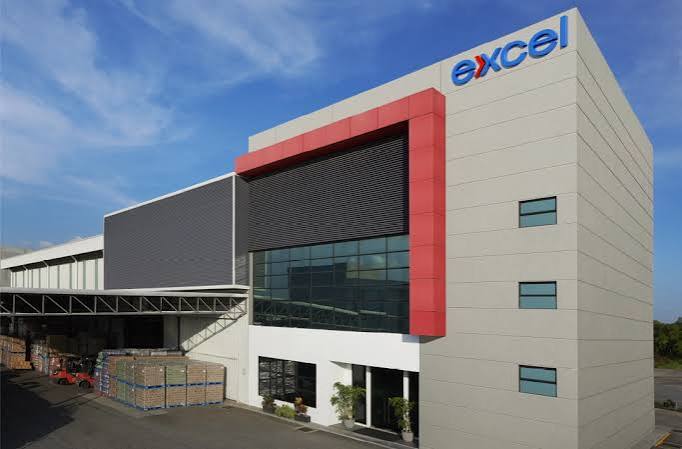
4.2. Excel M&E Sdn Bhd
Excel M&E is a Malaysian mechanical and electrical engineering contractor serving commercial, industrial, healthcare, port, residential, and mission-critical facilities. Its published service portfolio includes electrical systems, ACMV, ELV, and fire protection, with project references across several Malaysian states.
-
Core services: Electrical installation, ACMV, ELV systems, fire protection, power distribution, substations, and integrated M&E works
-
Key sectors: Data centres, healthcare, ports, industrial facilities, commercial buildings, and residential developments
-
Key strength: A broad M&E portfolio combined with publicly documented projects across commercial and mission-critical environments
-
Project evidence: Published references include Data Centre JHB1D and JHB2B in Johor, Hospital Kapar, Tanjung Pelepas Port, East Coast Mall in Kuantan, and Country Garden Danga Bay in Johor Bahru.
-
Verification: The company identifies itself as a CIDB G7 contractor and publishes project and service information on its official website. Current registration and certification status should be checked during procurement.
-
Website: Excel M&E
4.3. Kee Ming Group Berhad
Kee Ming Group Berhad is a Malaysian M&E engineering solutions provider with capabilities across electrical infrastructure, mechanical building services, and related engineering works. Its published corporate information describes design, supply, installation, testing, commissioning, and maintenance services.
-
Core services: HV, MV, LV and ELV systems, ACMV, fire protection, earthing, lightning protection, electrical installation, testing, commissioning, and maintenance
-
Key sectors: Building construction, electrical infrastructure, and projects requiring integrated M&E engineering
-
Key strength: A broad range of electrical and mechanical capabilities supported by stated contractor and electrical-contractor registrations
-
Project evidence: The company publishes corporate and service information describing its M&E capabilities. Project-specific references should be requested to establish its experience with the intended building type and contract scope.
-
Verification: Kee Ming states that it holds CIDB G7 registration and that Kee Ming Electrical is registered as a Class A electrical contractor with the Energy Commission. Verify the current registrations of the contracting entity that would sign the project contract.
-
Website: Kee Ming Group Berhad
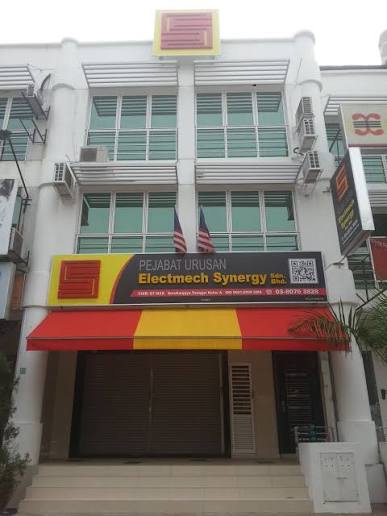
4.4. Electmech Synergy Sdn Bhd
Electmech Synergy is a Malaysian contractor specialising in mechanical and electrical services. Its website identifies electrical and mechanical engineering capabilities and publishes a portfolio of completed projects involving commercial buildings, industrial facilities, and other installations.
-
Core services: Mechanical and electrical engineering, electrical installation, power distribution, and project-specific M&E works
-
Key sectors: Commercial buildings, industrial facilities, public-sector facilities, and selected residential developments
-
Key strength: A specialist M&E contractor with publicly identified completed projects and stated contractor registrations
-
Project evidence: Published examples include the Denmark Embassy in Kuala Lumpur, Balai Polis in Kuala Lumpur, Gamalux Solvent Plant, KLE Plant C in Subang, Intretech JB, and One Bangsar.
-
Verification: The company identifies itself as a CIDB G7 M&E contractor and a Suruhanjaya Tenaga Class A electrical contractor. Confirm the current status and applicable scope of each registration.
-
Website: Electmech Synergy
4.5. Malaya MNE Engineering Sdn Bhd
Malaya MNE Engineering provides mechanical and electrical services to commercial, retail, hospitality, and industrial organisations in Malaysia. Its published portfolio describes an integrated service model covering design, installation, commissioning, and maintenance.
-
Core services: ACMV, electrical systems, plumbing and sanitary installations, firefighting systems, commissioning, and maintenance
-
Key sectors: Commercial buildings, retail, hospitality, and industrial facilities
-
Key strength: An integrated building-services offering that covers several major M&E disciplines throughout different project stages
-
Project evidence: The company describes a customer portfolio spanning commercial, retail, hospitality, and industrial organisations. Request named project references and details of the company's contractual scope for comparable projects.
-
Verification: Malaya MNE states that it was founded in 1979 and has more than four decades of experience. These are company-published statements and should be evaluated alongside project references and current registration records.
-
Website: Malaya MNE Engineering
4.6. Southern Score / SJEE Engineering Sdn Bhd
Southern Score's published electrical engineering services identify SJEE Engineering as a provider of turnkey electrical and mechanical solutions. The company describes services extending from project design and equipment supply to installation and maintenance, with a portfolio spanning infrastructure, industrial, and commercial work.
-
Core services: Electrical and mechanical engineering, equipment supply, installation, maintenance, and project-specific M&E works
-
Key sectors: Data centres, healthcare, pharmaceutical facilities, industrial and manufacturing sites, commercial properties, logistics, and ports
-
Key strength: Experience across electrical and M&E work packages in industrial and infrastructure environments, including projects with substantial electrical requirements
-
Project evidence: Southern Score publishes project information including an ongoing M&E package for Promatrix DC Solution Sdn. Bhd., an LV electrical works package for Gamuda Engineering, and completed general electrical works for Exyte Malaysia.
-
Verification: Its website states that SJEE holds CIDB Grade G7 and Energy Commission Class A certification. Confirm the registrations and contractual entity applicable to the proposed work.
4.7. RH M&E Sdn Bhd
RH M&E is a Malaysian M&E contractor whose published company profile emphasises high-voltage and low-voltage electrical installations. The company states that it provides supply, delivery, installation, testing, and maintenance services for housing and commercial building projects.
-
Core services: HV and LV electrical installations, equipment supply, installation, testing, and maintenance
-
Key sectors: Housing developments, commercial buildings, and projects requiring electrical installation services
-
Key strength: A defined electrical engineering focus supported by a published company history and stated quality-management credentials
-
Project evidence: RH M&E describes its involvement in various housing and commercial building projects. Request named projects, contract scopes, and client references relevant to the proposed package.
-
Verification: The company states that it was established in 1991 and is ISO 9001 certified. The current certificate, scope, and validity should be checked directly before appointment.
-
Website: RH M&E
4.8. BOND M&E Sdn Bhd
BOND M&E provides mechanical and electrical engineering services for building projects. Its published service description covers the supply, design, installation, testing, commissioning, and maintenance of electrical and air-conditioning and mechanical-ventilation systems.
-
Core services: Electrical systems, air conditioning, mechanical ventilation, M&E design support, installation, testing, commissioning, and maintenance
-
Key sectors: Industrial buildings, high-rise residential developments, commercial properties, hotels, institutions, hospitals, data centres, and warehouses
-
Key strength: A broad building-services portfolio with published project categories covering both conventional buildings and specialised facilities
-
Project evidence: BOND M&E lists industrial, high-rise residential, commercial, hotel, institutional, hospital, data-centre, and warehouse projects on its website. Specific project names and contractual responsibilities should be confirmed directly.
-
Verification: The company publishes contact information for its Johor Bahru and Kuala Lumpur offices, providing a starting point for confirming the delivery team and geographic coverage for a particular project.
-
Website: BOND M&E

4.9. Denlite Letrik Sdn Bhd
Denlite Letrik is a Malaysian M&E contracting company with experience across several building types. Its published company profile describes work involving commercial and residential buildings, shopping malls, universities, banks, and data centres.
-
Core services: M&E contracting and project delivery for building-services installations
-
Key sectors: Commercial and residential buildings, shopping malls, universities, banks, data centres, hospitals, and resort developments
-
Key strength: A long-established contracting profile covering a variety of building segments
-
Project evidence: The company's published examples include MAHSA Specialist Hospital, Aseania Resort in Langkawi, Universiti Utara Malaysia (UUM), and projects associated with MPSP and Jusco Bukit Mertajam.
-
Verification: Denlite states that it was founded in 1987 and has more than three decades of industry experience. Confirm the specific mechanical and electrical disciplines, project roles, and current registration status relevant to a proposed appointment.
-
Website: Denlite Letrik
4.10. ASOMA Solutions Sdn Bhd
ASOMA Solutions provides M&E services for commercial, industrial, healthcare, and residential projects in Malaysia. Its published portfolio includes mechanical and HVAC systems, electrical infrastructure, ELV and security systems, and selected specialist building services.
-
Core services: Air conditioning, mechanical ventilation, chilled water systems, electrical distribution, substations, generators, UPS, ELV and security, building automation, hospital renovation, and preventive maintenance
-
Key sectors: Hospitals, commercial buildings, residential developments, and industrial facilities
-
Key strength: A multi-discipline building-services offering that combines HVAC, electrical, ELV, and selected specialist systems
-
Project evidence: ASOMA lists projects including ACMV renovation at Menara OCBC in Kuala Lumpur, ACMV installation at Beacon Hospital, KPJ Hospital Rawang renovation, and M&E and interior works at Sri Kota Hospital.
-
Verification: The company states that it holds CIDB G7 registration and reports more than 20 years of experience. Confirm current registrations, project references, and the exact scope of the proposed contract.
-
Website: ASOMA Solutions
5. How to Choose an M&E Contractor in Malaysia
A suitable contractor should be selected according to the technical and contractual needs of the project, rather than company size or marketing claims alone.
5.1. Verify Registration and Technical Qualifications
Before appointing a contractor, check the registrations and licences relevant to the proposed work.
In Malaysia, the Construction Industry Development Board (CIDB) provides information on contractor registration. The Energy Commission, also known as Suruhanjaya Tenaga, provides information about electrical contractor registration and applicable categories.
The requirements depend on the work package, project circumstances, and applicable regulations. Do not assume that a general contractor registration automatically establishes authorisation for every specialist electrical activity.
For public-sector projects, also confirm any additional procurement requirements, licences, or eligibility conditions specified in the tender documents.
5.2. Evaluate Comparable Project Experience
A contractor's experience should be relevant to the proposed building type and technical scope.
For example, a data centre may require substantial electrical infrastructure, redundancy, cooling capacity, and carefully controlled commissioning. A hospital may have specialised ventilation, electrical continuity, and clinical-space requirements. A residential development may place greater emphasis on repetitive installation packages, programme coordination, and integration with other building trades.
Ask shortlisted companies to provide:
-
References for projects with comparable technical requirements.
-
Their actual contractual role in each reference project.
-
The M&E systems included in their scope.
-
The project stage and completion status.
-
Details of commissioning and handover responsibilities.
-
References that can be checked with the relevant client, subject to permission.
A project listed on a corporate website is a useful starting point, but it does not by itself establish the full extent of the company's responsibilities or the quality of its performance.
5.3. Confirm the Full Scope of Services
The term M&E contractor can describe companies with very different capabilities. Some focus primarily on electrical installation, while others offer mechanical systems, ACMV, fire protection, ELV, plumbing, or integrated MEP delivery.
Review the proposed scope against the project's requirements. Confirm which party is responsible for design development, equipment selection, procurement, installation, testing, commissioning, authority submissions, as-built documentation, and maintenance.
Where several subcontractors are involved, identify responsibility for interfaces between systems. For example, electrical power requirements for HVAC equipment must be coordinated with the mechanical design and electrical distribution arrangements.
5.4. Assess Project Management and Coordination
M&E installation is closely connected to architecture, structure, interiors, fire protection, and other building services. Coordination problems can lead to installation delays, access restrictions, rework, and conflicts between trades.
Assess the contractor's ability to manage technical queries, drawings, site instructions, design changes, programme updates, and coordination meetings.
For complex projects, ask whether the team uses coordinated BIM models, model-based reviews, clash detection, or other structured coordination procedures. Establish how issues are recorded, assigned, resolved, and approved.
5.5. Review Quality Assurance and Commissioning
Quality control should be assessed against the project specifications, relevant standards, and contractual acceptance criteria.
Ask about inspection and test plans, installation checklists, material approvals, equipment documentation, commissioning procedures, defect management, and handover records.
For systems requiring specialist testing or certification, identify who is responsible for carrying out the work and providing the required documentation.
5.6. Compare Commercial Proposals on a Like-for-Like Basis
A lower tender price does not necessarily represent a lower overall project cost. Differences in scope, equipment specifications, exclusions, temporary works, testing, commissioning, and documentation can make quotations difficult to compare.
A structured tender comparison should consider:
-
Scope inclusions and exclusions.
-
Equipment specifications and approved alternatives.
-
Labour, materials, and subcontracting arrangements.
-
Design and coordination responsibilities.
-
Programme, milestones, and payment terms.
-
Testing, commissioning, and handover.
-
Warranty, defects liability, and maintenance obligations.
-
Change control, variation pricing, and dispute resolution.
-
Insurance, liability, and other contractual requirements.
The final selection should balance technical compliance, delivery capability, project risk, and commercial value.
6. The Role of BIM in M&E Construction Projects
Building Information Modeling (BIM) can support M&E contractors by providing a coordinated digital representation of building systems and their spatial relationships. Rather than relying exclusively on separate two-dimensional drawings, project teams can use discipline models to review equipment locations, service routes, clearances, and interfaces with architecture and structure.
6.1. MEP Coordination
MEP coordination involves aligning mechanical, electrical, and plumbing systems with one another and with the architectural and structural design. For example, ductwork, cable trays, pipework, sprinkler systems, and structural beams may compete for space in ceilings, risers, plant rooms, and service corridors. Coordination helps teams identify these interfaces before installation.
The model's usefulness depends on the quality and completeness of the source information, the agreed level of development, and the frequency with which the participating disciplines update their models.
6.2. Clash Detection
Clash detection is the process of identifying geometric conflicts or other defined coordination issues between model elements.
Examples include:
-
A duct intersecting a structural beam.
-
Pipework conflicting with a cable tray.
-
Equipment occupying the required maintenance access zone.
-
Services obstructing an access panel or equipment replacement route.
-
Insufficient space for installation or coordinated service routing.
A clash report does not automatically resolve an issue. The responsible design or construction team must review the finding, agree on an appropriate solution, and update the relevant documentation or model.
6.3. BIM and Construction Documentation
Depending on the agreed scope and model development level, BIM can support the production and review of coordinated drawings, MEP shop drawings, installation details, and as-built information. A coordinated model can also help project teams understand design changes and their effects on related building systems.
However, the contract should clearly state which drawings and documents are deliverables, which party is responsible for checking them, and whether the model is intended for design coordination, installation, fabrication, or facility management.
6.4. Potential Benefits for M&E Contractors
When properly implemented, BIM coordination can help M&E contractors:
-
Identify spatial conflicts earlier in the construction process.
-
Improve communication between architectural, structural, and MEP teams.
-
Support planning for congested plant rooms, risers, and ceiling spaces.
-
Reduce avoidable rework associated with coordination problems.
-
Improve the consistency of model-based drawings and documentation.
-
Maintain a clearer record of coordination decisions.
These are potential benefits rather than guaranteed outcomes. Results depend on model quality, project processes, timely decisions, and the cooperation of all relevant parties.
7. BIM Outsourcing Support for M&E Contractors: DHA Engineering
M&E contractors may need additional BIM production and coordination resources when handling complex building projects, tight drawing schedules, or multiple simultaneous work packages.
DHA Engineering is a Vietnam-based BIM consulting and engineering services provider offering architectural and structural BIM modeling, MEP BIM coordination, clash detection, MEP shop drawings, and related engineering support.
7.1. BIM Modeling and MEP Coordination
DHA's published services include architectural and structural BIM models developed in Autodesk Revit, as well as MEP BIM coordination and clash detection using Navisworks and Dalux. Depending on the agreed deliverables, this support can help an M&E contractor coordinate mechanical and electrical systems against the available architectural and structural models. The model development level, information requirements, software versions, exchange formats, and review procedures should be established at the beginning of the engagement.
7.2. Clash Detection and Multidisciplinary Coordination
DHA describes a coordination workflow that includes model development, clash detection, reporting, and updates based on approved coordination decisions. For an M&E contractor, this type of support can help identify potential conflicts between services and other building elements before installation. The contractor and relevant design team remain responsible for reviewing findings and approving technical changes.
7.3. MEP Shop Drawings and Technical Documentation
DHA's published service portfolio includes MEP shop drawings that are coordinated with BIM models. For contractors that need additional drawing-production resources, outsourced support may help manage documentation workloads. The precise deliverables, checking responsibilities, approval process, and issue status must be defined in the project scope.
7.4. Potential Benefits of BIM Outsourcing
Depending on project requirements and the provider's available capacity, BIM outsourcing may help M&E contractors:
-
Supplement internal BIM modeling resources.
-
Support model-based coordination across architecture, structure, and MEP.
-
Identify and document potential clashes.
-
Produce agreed MEP shop drawings and related BIM deliverables.
-
Manage workload fluctuations across multiple projects.
-
Provide a structured digital record of coordination issues and their resolution status.
The value of outsourcing depends on clear information requirements, timely access to current design documents, effective communication, and defined responsibilities between the contractor, consultant, and BIM service provider.
7.5. Why Consider DHA Engineering?
DHA Engineering's published service portfolio covers BIM roadmap consulting, architectural and structural BIM, MEP coordination, clash detection, MEP shop drawings, MEPF design, and as-built BIM models.
For M&E contractors evaluating an external BIM partner, the appropriate next step is to discuss the actual project scope, target LOD, model inputs, coordination process, required deliverables, programme, and available resources.
More information is available through DHA Engineering's official website and services page.
8. Frequently Asked Questions
8.1. What should I check before hiring an M&E contractor in Malaysia?
Check the contractor's relevant registrations, technical qualifications, experience with comparable projects, scope of services, available resources, quality procedures, commissioning capability, and contractual terms. Request verifiable project references and confirm the legal entity that will enter into the contract.
8.2. What is the difference between an M&E contractor and an MEP contractor?
M&E refers to mechanical and electrical services. MEP expands the term to mechanical, electrical, and plumbing. In practice, the terminology overlaps, and some M&E contractors also provide plumbing, sanitary, fire protection, and other building-services work. Always assess the actual scope rather than relying on the company label.
8.3. Do M&E contractors provide design services?
Some do. Depending on their capabilities and contract, an M&E contractor may provide design-and-build services, design development, or engineering support. Others work from designs prepared by an appointed consultant. The contract should identify who is responsible for design, professional approvals, calculations, and compliance with applicable requirements.
8.4. Are CIDB G7 contractors suitable for every M&E project?
Not automatically. CIDB registration grade is one factor in assessing contractor eligibility and project scale. It does not, by itself, prove that a company has the specialist skills, experience, personnel, or resources required for a particular M&E package. Confirm the relevant registration category and technical capabilities.
8.5. How does BIM help M&E contractors?
BIM can support coordination between mechanical, electrical, plumbing, architectural, and structural models. Clash detection helps identify potential conflicts, while coordinated models can support drawing production, installation planning, and documentation. The benefits depend on model quality, agreed responsibilities, and the project's coordination process.
8.6. Can M&E contractors outsource BIM modeling and coordination?
Yes. A contractor may engage an external BIM provider to supplement its internal modeling and coordination capacity. Before outsourcing, agree on model ownership, software and file formats, LOD, scope boundaries, quality checks, communication procedures, delivery dates, and responsibilities for technical decisions.
8.7. What information should be included in an M&E tender?
An M&E tender should define the required systems, design information, specifications, drawings, equipment requirements, scope boundaries, programme, testing and commissioning requirements, handover documents, and commercial conditions. It should also identify interfaces with the main contractor, consultants, and other specialist trades.
8.8. Can BIM outsourcing replace the M&E contractor's coordination responsibilities?
No. BIM outsourcing can provide modeling, clash detection, and documentation support within the agreed scope. The M&E contractor remains responsible for its contractual obligations, installation work, and the technical decisions assigned to it. Design approvals and other professional responsibilities must remain with the parties appointed to perform them.
See more:
BIM Application in Construction: Benefits, Levels, and Implementation Process
Architectural BIM Services: How to Choose the Right BIM Provider
Remote BIM Jobs: Career Opportunities, Skills, and How to Work from Home
main.comment_read_more