
BIM Model - The Popular Construction Method Of The Future
Table of contents [Hide]
In recent years, the BIM model has grown in popularity as more organizations have adopted and used it in construction investment projects. The application of BIM in design, construction, and operation management has brought significant and effective changes to the construction industry
What is BIM model?
- The BIM model (Building Information Modeling) can be understood simply as the use of information technology advancements to digitize construction information based on the model (3D) to support the architectural design, construction, and operation management process. It aims for an efficient working process where information can be reused without the need to recreate it, optimizing project implementation methods.
- By coordinating and using a shared database through the BIM platform, stakeholders can exchange and collaborate better, ensuring transparency and accuracy of information in the construction investment project development process.
- The difference between the BIM model and traditional methods is reflected in the database. Traditional methods use 2D drawings, and information is presented in the form of a combination of drawings and descriptive documents. Meanwhile, the BIM model uses a digital model that integrates data providing information about shape, physical characteristics, function.
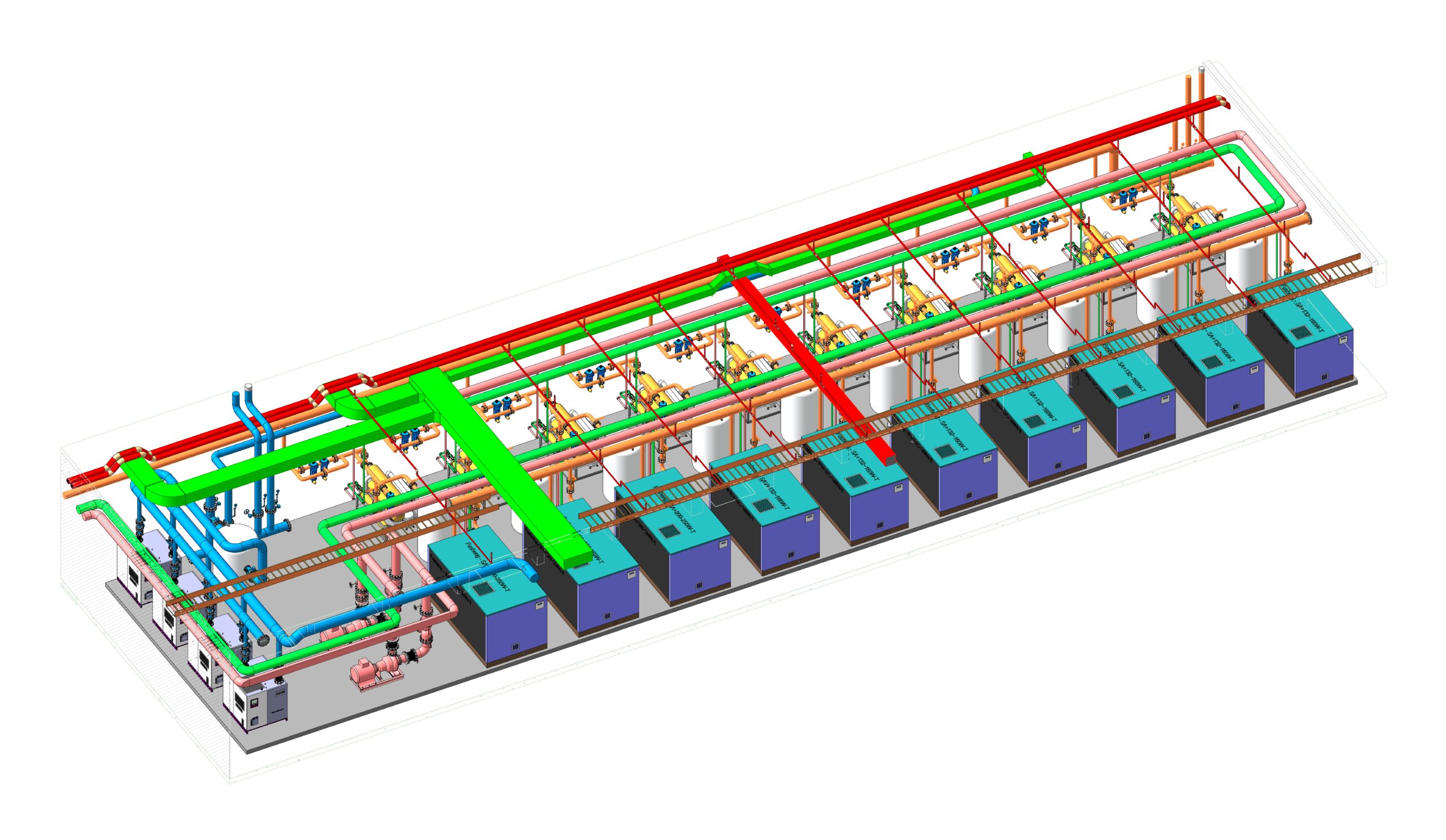
Air compressor planroom
How was the BIM model developed and evolved?
- The BIM model appeared in the late 1970s when drawings were created inefficiently due to limitations in visualizing buildings and difficulties in updating drawings. Over time, the construction industry has faced many complex requirements and challenges, and the application of information technology is necessary to achieve better efficiency and meet project expectations. The BIM model has been and is being used to meet the needs of the construction industry and is now being applied in developed countries such as the United States, Finland, Hong Kong, and Australia.
- The BIM model brings changes to construction management and implementation, achieving many significant benefits such as improving processes, planning, design, construction, and operation.
Some applications of BIM model in construction
The BIM model can be used for various purposes, here are some main applications of BIM:
- BIM application in structural engineering: the 3D geometrically encoded BIM model based on data allows modeling and analyzing these models for design, construction, and operation purposes.
- BIM application in reinforced concrete: By using BIM model, steel reinforcement details, structural components are designed, recorded, tracked, and controlled. The BIM model makes surveying and estimating quantities easier.
- BIM application in architectural design: helps architects have a general simulated view of the physical characteristics of a building. It saves time and enhances performance in designing a building, meaning that the construction process is carried out earlier.
- BIM application in infrastructure: BIM model in infrastructure projects such as roads, railways, drainage systems, utilities which helps improve results with the ability to evaluate, check multiple options, provide assurance based on data to ensure the project is completed on schedule and within budget.
- BIM application in project life cycle assessment: The lifecycle of a project begins from design to construction and management of physical assets, including many project management processes. Using the BIM model supports the exchange of information between parties to manage the project lifecycle more effectively. Why is the BIM model changing the construction industry?
Integration of Advanced Technologies in BIM
- The BIM model has received a lot of attention and interest as units and organizations see the great potential of the BIM model for the construction industry. Based on the BIM platform, digital transformation technologies 4.0 and other trends are integrated such as virtual reality VR, cloud computing, artificial intelligence AI. These trends are constantly updated and will quickly impact the development of BIM to a new level.
- BIM models can be used to create construction documents, assess the impact of proposed changes, and simulate construction scenarios. To put it another way, BIM is altering the way construction projects are planned, executed, and managed.
- The ability of BIM to deliver even more precise and thorough information about construction projects is what will determine its future. As a result, coordinating the planning and management of construction projects will be even simpler for architects, engineers, and contractors.
Ending
We hope this article helps you gain more insights and understanding of the BIM model and its applications in general and the construction industry in particular. If you need advice on construction design, mechanical and electrical design, or electrical design for villas and mansions, please contact DHA Engineering for the best support and advice.
main.comment_read_more