
M&E Contractors UK: 10 Mechanical and Electrical Companies to Consider
- 1. What Are M&E Contractors in the UK?
- 2. 10 M&E Contractors and Building Services Companies in the UK
- 2.1. NG Bailey
- 2.2. TClarke
- 2.3. SES Engineering Services
- 2.4. Briggs & Forrester
- 2.5. Dalkia UK
- 2.6. Imtech
- 2.7. Dornan Engineering Services
- 2.8. Crown House Technologies
- 2.9. Cundall
- 2.10. Arup
- 3. How to Choose an M&E Contractor in the UK
- 3.1. Experience With Comparable Projects
- 3.2. Technical Design and Installation Capability
- 3.3. Health and Safety
- 3.4. Quality Assurance and Commissioning
- 3.5. BIM and Digital Engineering Capability
- 3.6. MEP Coordination and Clash Detection
- 3.7. Programme, Procurement and Installation Resources
- 3.8. Commercial Stability and Contractual Clarity
- 4. Why Consider DHA Engineering for BIM Outsourcing?
- 4.1. BIM Modelling and MEP Coordination
- 4.2. Software and Digital Workflow
- 4.3. Benefits for UK M&E Contractors
- 4.4. How to Evaluate DHA Engineering
- 4.5. Discuss Your BIM Outsourcing Requirements With DHA Engineering
- 5. Frequently Asked Questions About M&E Contractors UK
- What does M&E stand for in construction?
- What is the difference between an M&E contractor and an MEP contractor?
- How do I find the right M&E contractor in the UK?
- Who are the biggest M&E contractors in the UK?
- Are the largest M&E contractors always the best choice?
- What services do M&E contractors provide?
- Do M&E contractors provide BIM coordination?
- What is BIM outsourcing for M&E contractors?
- Can an overseas BIM provider support a UK M&E contractor?
- What should I check before appointing an M&E contractor?
- What should I include in an M&E tender package?
- See more:
- DHA Vietnam Engineering Co., Ltd.
Choosing an M&E contractor in the UK involves more than comparing quotations. Developers, main contractors, consultants and building owners need a partner with the right mechanical and electrical engineering capabilities, project experience, technical resources and delivery model. The right choice can influence programme certainty, building performance, installation quality, operational efficiency and coordination between construction disciplines.
1. What Are M&E Contractors in the UK?
M&E contractors are responsible for delivering some or all of the mechanical and electrical systems that make buildings operational. Depending on the contract, their responsibilities may include design development, procurement, installation, testing, commissioning and handover.
Mechanical services commonly include heating, ventilation and air conditioning (HVAC), chilled water systems, heating and cooling plant, domestic water services, drainage and associated controls. Electrical services may cover power distribution, lighting, emergency lighting, containment, earthing, fire alarm systems and other building electrical infrastructure.
In the UK construction industry, the term building services contractor is also widely used. It may refer to an organisation delivering mechanical and electrical installation, integrated building services, or a broader combination of engineering, offsite manufacturing, maintenance and technical support.
However, not every company working in the M&E sector is an installation contractor. Some organisations primarily provide building services design and engineering consultancy, while others specialise in facilities management, energy services or digital engineering support.
2. 10 M&E Contractors and Building Services Companies in the UK
The following shortlist includes major engineering businesses, established M&E contractors and specialist building services consultancies. Official websites are provided so readers can review current services, locations, case studies and procurement information.
2.1. NG Bailey
NG Bailey is an established UK engineering business delivering mechanical and electrical engineering, power engineering, offsite manufacture, digital services and technical facilities services. Its work spans the design, manufacture and installation of building systems and engineering infrastructure. With a long operating history and national presence, the company may be relevant to complex building and infrastructure projects.
-
Core services: Mechanical and electrical engineering design and installation, offsite manufacture, power engineering, electrical infrastructure, digital services and technical facilities management.
-
Key sectors: Healthcare, defence, education, transport infrastructure, advanced manufacturing, commercial buildings and data centres.
-
Key strength: Integration of engineering delivery with digital resources and offsite manufacturing, supporting coordination and programme control.
-
Verification: NG Bailey's published project portfolio includes Manchester Airport Terminal 2 and Pier 2, Manchester Town Hall, Silvertown Tunnel and One North Quay at Canary Wharf. Confirm the company's proposed scope and relevant project references for each tender.
-
Website: NG Bailey
-
LinkedIn: NG Bailey on LinkedIn
2.2. TClarke
TClarke is a UK engineering services business working across building services and technology-led engineering projects. Its published information highlights integrated building services, complex engineering projects and a national operational presence, making it a potential candidate for projects requiring coordination across multiple technical systems.
-
Core services: Mechanical and electrical building services, integrated engineering and technology-related services, building systems integration and technical delivery for complex construction projects.
-
Key sectors: Commercial buildings, infrastructure and technically demanding developments; confirm current sector experience against the specific project brief.
-
Key strength: Coordinating multiple engineering and building systems within complex construction projects.
-
Verification: TClarke publishes company announcements and project information through its official website. The Building Engineering Services Association (BESA) UK M&E contractors report can provide a turnover-based market benchmark; check the relevant reporting year and do not treat ranking as a substitute for delivery due diligence.
-
Website: TClarke
-
LinkedIn: TClarke on LinkedIn
2.3. SES Engineering Services
SES Engineering Services delivers mechanical, electrical and public health engineering across complex construction projects. Its published service offering emphasises MEP delivery, digital design and offsite manufacturing, and the company works with contractors, developers and end users on technically demanding buildings.
-
Core services: Mechanical and electrical engineering, public health engineering, MEP design and installation, digital engineering, coordinated design and offsite manufacturing.
-
Key sectors: Commercial developments, healthcare, critical infrastructure and data centres.
-
Key strength: Combining coordinated MEP design with digital engineering and offsite delivery for larger, technically complex packages.
-
Verification: Published project examples include 33 Charterhouse Street, 4 Angel Square, 11 and 12 Wellington Place, the Belfry Hotel & Resort expansion and Springfield Hospital. Confirm the precise contractual scope and services delivered on comparable references.
-
Website: SES Engineering Services
2.4. Briggs & Forrester
Briggs & Forrester is an employee-owned building services business with a long history in the mechanical and electrical sector. Its published offering spans consultancy, engineering design, BIM, installation and commissioning, which may suit projects where design and delivery need to be coordinated within one building services approach.
-
Core services: Mechanical and electrical building services, building services consultancy and design, BIM and digital engineering, installation and commissioning.
-
Key sectors: A broad range of building sectors; verify the experience of the proposed regional team against the project's building type and scale.
-
Key strength: Combining design, BIM, installation and commissioning capabilities within an employee-owned business.
-
Verification: The company's website has published group-level experience, employee and turnover figures. Treat these as company-reported data and check the latest corporate disclosures before using them in a formal comparison. Ask for relevant project references, BIM deliverables and details of design responsibility.
-
Website: Briggs & Forrester
2.5. Dalkia UK
Dalkia UK operates across engineering, mechanical and electrical services, facilities management and energy-related solutions. Its service model includes design-and-build engineering, installation, maintenance and energy management, making it relevant to clients considering both new construction and the ongoing operation of building systems.
-
Core services: Mechanical and electrical engineering, design-and-build building services, HVAC, planned and reactive maintenance, energy efficiency, decarbonisation and technical facilities management.
-
Key sectors: Education, healthcare, commercial property, energy and utilities, nuclear-related infrastructure, leisure and specialist technical environments.
-
Key strength: Connecting engineering delivery with operational performance, maintenance and energy-efficiency services.
-
Verification: Published case studies include Royal Birmingham Conservatoire, the new main stand at Anfield Stadium, Victoria Square Energy Centre and ancillary buildings at Hinkley Point C. These references involve different scopes; confirm the responsible business unit and services delivered for each project.
-
Website: Dalkia UK
-
LinkedIn: Dalkia UK on LinkedIn

2.6. Imtech
The name Imtech has been associated with technical and building engineering services, but its current UK identity needs particular care: available company-profile information states that Imtech rebranded to Dalkia UK. It should therefore not automatically be treated as a separate current M&E contractor without confirming the legal entity and service offering relevant to the proposed contract.
-
Core services: Historically associated with technical engineering and building services; confirm the current entity's mechanical and electrical installation, maintenance and other service responsibilities before inclusion in a shortlist.
-
Key sectors: Establish from current official company documentation and recent project references; do not assume that projects attributed to a predecessor or related company represent the current entity.
-
Key strength: Potential continuity of technical-services experience, subject to verification of the current operating structure and delivery capabilities.
-
Verification: The available company profile states that Imtech rebranded to Dalkia UK. Confirm the exact legal entity, current UK M&E offering, financial information, delivery team and recent references before tendering.
-
Website: Dalkia UK
-
LinkedIn: Imtech on LinkedIn

2.7. Dornan Engineering Services
Dornan Engineering Services is an engineering contractor associated with mechanical and electrical services and complex building services projects. It may be relevant to a UK project search where an international engineering business is being considered, but its current UK project coverage and proposed contracting entity should be confirmed before it is compared directly with UK-based contractors.
-
Core services: Mechanical and electrical installation, building services coordination and technical delivery for complex developments, subject to the scope offered by the relevant operating entity.
-
Key sectors: Potentially data centres, commercial buildings and other technically demanding environments; confirm current sector experience and UK references directly with Dornan.
-
Key strength: Engineering coordination and delivery for technically complex M&E packages, where supported by relevant project references.
-
Verification: The BESA UK M&E Contractors report can help contextualise turnover-based comparisons. Any ranking or turnover figure attributed to Dornan should be tied to a specific reporting year and source. Confirm local delivery resources, subcontracting arrangements and current UK contractual presence.
-
Website: Dornan
2.8. Crown House Technologies
Crown House Technologies is associated with Laing O'Rourke's engineering and building services activities. It may be relevant to project teams seeking engineering expertise integrated with a wider construction programme, particularly where the procurement strategy involves coordinated construction and specialist engineering delivery.
-
Core services: Building services engineering and installation, mechanical and electrical systems, engineering coordination and offsite or manufacturing-led delivery where included in the relevant scope.
-
Key sectors: Confirm the current business unit's sector coverage and project portfolio against the requirements of the proposed development.
-
Key strength: Potential integration of specialist engineering capability with a major construction group's delivery processes.
-
Verification: Use official Laing O'Rourke and relevant business-unit project information to establish Crown House Technologies' exact role. A project delivered by the parent group should not automatically be attributed to Crown House Technologies unless its involvement is documented. Confirm current legal structure, procurement route and responsible delivery team.
-
Website: Laing O'Rourke
-
LinkedIn: Crown House Technologies on LinkedIn
2.9. Cundall
Cundall is a multidisciplinary engineering consultancy providing building services engineering and other technical disciplines. Its role should be distinguished from that of an M&E installation contractor: Cundall is primarily relevant where a client needs engineering design, technical analysis and multidisciplinary coordination rather than physical installation on site.
-
Core services: Building services engineering design, mechanical and electrical engineering, sustainability and energy consultancy, fire engineering, acoustics and multidisciplinary engineering coordination.
-
Key sectors: Commercial workplaces and other building types requiring integrated engineering design and sustainability expertise.
-
Key strength: Multidisciplinary design coordination with a focus on building performance and sustainability.
-
Verification: Published project examples include Diageo's global headquarters in London and Three Chamberlain Square in Birmingham. Review the relevant case studies to confirm the scope of building services and any additional disciplines provided.
-
Website: Cundall
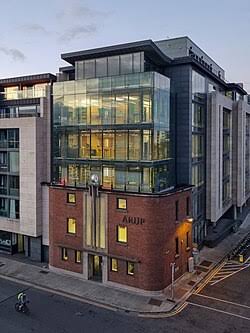
2.10. Arup
Arup is a multidisciplinary engineering consultancy offering building services engineering as part of a wider engineering practice. Its services include mechanical, electrical and public health engineering for buildings and infrastructure, making it relevant where a project requires design expertise, systems analysis and coordination across multiple disciplines rather than a standalone installation contractor.
-
Core services: Mechanical engineering and HVAC design, electrical engineering and power systems, public health engineering, building services design, technical analysis and sustainability support.
-
Key sectors: Commercial property, education, infrastructure and other building and infrastructure markets.
-
Key strength: Multidisciplinary engineering design and technical integration for projects with demanding sustainability, energy-performance or systems-coordination requirements.
-
Verification: Published case studies include 11 and 12 Wellington Place in Leeds, where the work includes mechanical, electrical and plumbing services and energy-performance considerations, and the University of Southampton Business School, where building services were reviewed and redesigned. Confirm the exact consultancy scope for any project used as a reference.
-
Website: Arup
3. How to Choose an M&E Contractor in the UK
Selecting an M&E contractor requires a structured assessment of technical capability, commercial risk and delivery performance. The following criteria can help developers, main contractors and project managers compare bids more consistently.
3.1. Experience With Comparable Projects
Ask bidders to provide examples of completed projects with a similar building type, service complexity, contract scope and programme.
Relevant experience may include hospitals with strict operational constraints, data centres requiring resilient mechanical and electrical systems, commercial buildings with dense service zones, or industrial facilities with specialised environmental requirements.
For each reference, establish:
-
The contractor's actual role and contractual responsibilities.
-
The mechanical and electrical systems delivered.
-
The project value and completion period, where disclosable.
-
Whether the building was new-build, refurbishment or an extension.
-
Any commissioning, handover or operational constraints.
-
The identity of the client or main contractor, where reference checks are permitted.
A project listed on a company's website is useful evidence of involvement, but it should not automatically be interpreted as proof that the company delivered every M&E discipline.
3.2. Technical Design and Installation Capability
The required technical capability depends on the scope of the contract. Some projects require installation against a completed design, while others require design development, coordination and design-and-build delivery.
Assess the contractor's ability to address:
-
HVAC plant selection and distribution.
-
Heating, cooling and ventilation systems.
-
Electrical distribution and lighting.
-
Public health services and drainage.
-
Building controls and system integration.
-
Fire alarm and life-safety interfaces, where included.
-
Testing, commissioning and handover.
-
Integration with existing services on refurbishment projects.
The tender documents should clearly define design responsibility, assumptions, exclusions, performance criteria and the party responsible for each interface.
3.3. Health and Safety
Construction work requires appropriate planning, risk management and control of site activities. The contractor's approach should be assessed against the project's hazards and the responsibilities established under applicable UK legislation.
Review the proposed arrangements for:
-
Construction phase planning and risk assessments.
-
Site inductions and competence management.
-
Safe isolation and electrical work procedures.
-
Working at height and access to plant areas.
-
Lifting operations and delivery of large equipment.
-
Hot works and other permit-controlled activities.
-
Coordination with other trades and site management.
-
Incident reporting and corrective actions.
Where relevant, ask for current health and safety policies, performance information, insurance documentation and evidence of applicable certifications. Verify the scope and validity of any certificate rather than relying on a logo alone.
3.4. Quality Assurance and Commissioning
A well-installed system must also be tested, commissioned and documented properly. The contractor's quality plan should identify inspection stages, testing responsibilities, acceptance criteria and the information required for handover.
Assess its procedures for:
-
Inspection and test plans.
-
Installation checks and quality records.
-
Equipment schedules and technical submittals.
-
Testing and commissioning.
-
Defect tracking and close-out.
-
As-built drawings and system documentation.
-
Operation and maintenance manuals.
-
Training and handover to the facilities team.
For technically complex projects, confirm how the contractor will demonstrate system performance and manage interfaces between mechanical, electrical, controls and life-safety systems.
3.5. BIM and Digital Engineering Capability
Building Information Modelling (BIM) can support M&E coordination by improving the visibility of service routes, equipment locations, access requirements and interfaces with architectural and structural elements.
A contractor's BIM capability should be evaluated in terms of its actual workflow and deliverables, not simply whether it uses BIM software.
Key questions include:
-
Can the team work with the project's required authoring and coordination platforms?
-
How are model responsibilities divided between disciplines?
-
How are model versions and design changes controlled?
-
How are clashes identified, prioritised and closed?
-
Can the team coordinate access and maintenance clearances?
-
How are model information requirements and delivery milestones defined?
-
Are model outputs linked to installation drawings and construction sequencing?
BIM coordination should support the project execution plan. It does not replace engineering calculations, design approval, site verification or formal commissioning.
3.6. MEP Coordination and Clash Detection
MEP coordination is especially important in projects with congested ceilings, plantrooms, risers, service corridors and prefabricated assemblies.
Mechanical ducts, pipework, electrical containment, structural members and architectural features can compete for limited space. If these interfaces are not resolved early, they may result in site rework, delayed installation, changes to fabrication drawings or restricted maintenance access.
A robust coordination workflow should include:
-
Confirming model inputs, coordinate systems and project tolerances.
-
Federating the relevant architectural, structural and MEP models.
-
Running clash detection and reviewing significant results.
-
Assigning issues to the responsible discipline or party.
-
Recording decisions and tracking issue status.
-
Updating models and checking that resolved issues remain closed.
-
Issuing agreed model and drawing deliverables for construction.
The contractor should explain how it will manage these activities, who is responsible for decisions and how the approved information will reach site teams.
3.7. Programme, Procurement and Installation Resources
An M&E contractor's programme should be coordinated with the overall construction schedule. Mechanical and electrical installation often depends on access, structural completion, builder's work openings, equipment deliveries and the readiness of plantrooms or risers.
Assess the proposed approach to:
-
Design and submittal deadlines.
-
Long-lead equipment procurement.
-
Builder's work and penetration coordination.
-
Offsite fabrication and prefabrication.
-
Delivery, storage and installation sequencing.
-
Access to work areas and other trade interfaces.
-
Testing, commissioning and phased handover.
Ask bidders to identify programme assumptions and dependencies explicitly. A low-cost tender may not be comparable with another bid if the two contractors have made different assumptions about design responsibility, working hours, procurement or commissioning.
3.8. Commercial Stability and Contractual Clarity
Commercial due diligence should consider the contractor's financial position, insurance, contractual capacity and approach to managing changes.
Review the proposed payment terms, exclusions, provisional sums, subcontracting arrangements, warranties and responsibility for design changes. For large or long-duration projects, current financial information may be particularly important.
If turnover or workforce figures are used to assess a company's scale, record their source and reporting period. Do not substitute group-wide figures for the capacity of the specific team or legal entity that will deliver the work.
4. Why Consider DHA Engineering for BIM Outsourcing?
Website: DHA Engineering
DHA Engineering provides BIM and engineering-related services, including BIM roadmap consulting, architectural and structural modelling, MEP coordination and MEP shop drawings. These services may support UK M&E contractors that need additional BIM production capacity for construction projects.
DHA should be considered a potential BIM outsourcing partner rather than an M&E installation contractor. Its scope of work and technical responsibilities should be clearly defined before engagement.
4.1. BIM Modelling and MEP Coordination
DHA's published services cover BIM modelling and MEP-related support, potentially including:
-
MEP model development based on approved design information.
-
Coordination between mechanical, electrical, architectural and structural models.
-
Clash detection and coordination reporting.
-
Model updates and MEP drawing production.
The required deliverables, modelling standards and review responsibilities should be agreed at the start of the project.
4.2. Software and Digital Workflow
DHA's published materials refer to Autodesk Revit, Navisworks and Dalux. UK contractors should confirm software versions, file formats, modelling standards, revision control and coordination procedures to ensure compatibility with project requirements.
4.3. Benefits for UK M&E Contractors
BIM outsourcing may help contractors manage workload fluctuations, supplement internal modelling resources and support coordination deadlines. However, its effectiveness depends on clear deliverables, reliable project information, quality assurance and timely communication.
4.4. How to Evaluate DHA Engineering
Before appointing DHA, contractors should assess:
-
Scope and deliverables: Required models, drawings, coordination tasks and delivery milestones.
-
Technical requirements: BIM execution requirements, software versions and model standards.
-
Quality assurance: Model checking, revision management and issue resolution.
-
Communication: Project contacts, review schedules and reporting procedures.
-
Security: Confidentiality, file access and project data handling.
4.5. Discuss Your BIM Outsourcing Requirements With DHA Engineering
UK contractors seeking external BIM support can visit DHA Engineering to review its services and discuss project requirements.
Before requesting a proposal, prepare the project scope, required BIM outputs, software environment, delivery programme, coordination responsibilities and information security requirements. This helps establish whether DHA's services align with the project's needs.
5. Frequently Asked Questions About M&E Contractors UK
What does M&E stand for in construction?
M&E stands for mechanical and electrical. In construction, it generally refers to the building systems that provide heating, cooling, ventilation, electrical power, lighting and other mechanical or electrical services. The exact scope varies by contract and may also include public health services, controls and specialist systems.
What is the difference between an M&E contractor and an MEP contractor?
M&E means mechanical and electrical, while MEP means mechanical, electrical and plumbing. In UK construction, building services contracts may use either term, and their scope can overlap. Always check the tender documents to establish whether plumbing, public health engineering, controls, fire systems or other specialist services are included.
How do I find the right M&E contractor in the UK?
Start by defining the project scope, location, programme and design responsibilities. Shortlist companies with relevant project experience, then compare their technical submissions, delivery resources, safety arrangements, quality procedures, commissioning plans and commercial assumptions. Verify references and the legal entity that will undertake the contract.
Who are the biggest M&E contractors in the UK?
There is no single permanent list that establishes the biggest contractors for every purpose. The Building Engineering Services Association publishes a Top 30 UK M&E Contractors report that provides a turnover-based market comparison for a stated reporting period. Check the relevant edition, methodology and financial year before using the figures.
Are the largest M&E contractors always the best choice?
No. Financial scale may indicate organisational resources, but it does not guarantee suitability for a specific project. A smaller specialist contractor may have more relevant experience, stronger regional coverage or a delivery model better suited to the project. Evaluate project fit alongside company size.
What services do M&E contractors provide?
Depending on their scope, M&E contractors may provide mechanical and electrical design, HVAC installation, electrical distribution, lighting, public health services, controls integration, procurement, installation, testing, commissioning and handover. Some also provide offsite manufacturing, maintenance and lifecycle services.
Do M&E contractors provide BIM coordination?
Some M&E contractors have in-house BIM and digital engineering teams, while others use specialist consultants or external BIM providers. BIM coordination can support model development, clash detection, issue tracking and coordinated drawings. Confirm the contractor's actual deliverables and responsibilities in the tender.
What is BIM outsourcing for M&E contractors?
BIM outsourcing is the use of an external provider to deliver agreed digital engineering tasks, such as MEP modelling, clash detection support, model updates or technical drawings. It can supplement internal capacity, but it does not automatically transfer the contractor's design, installation, safety or commissioning responsibilities.
Can an overseas BIM provider support a UK M&E contractor?
Potentially, yes. A remote BIM provider can support agreed modelling and documentation workflows if the parties establish compatible software, project standards, communication arrangements, quality checks, confidentiality controls and clear responsibility for technical decisions. The contractor should verify the provider's capabilities and agree on measurable deliverables before starting.
What should I check before appointing an M&E contractor?
Check the company's legal identity, financial information, insurance, relevant experience, technical resources, safety arrangements, quality procedures, proposed subcontractors and project programme. Confirm design responsibility, testing and commissioning obligations, warranties, handover requirements and contractual exclusions.
What should I include in an M&E tender package?
An M&E tender package should define the project scope, drawings and specifications, design responsibility, programme, interfaces, procurement requirements, commissioning obligations, handover documentation and commercial terms. If BIM is required, include the applicable information requirements, model standards, exchange formats and coordination deliverables.
See more:
BIM Services UK: Reputable BIM Companies, Evaluation Criteria
Architecture Offices in London: 10 Leading Architecture Firms, UK Market Guide and BIM Outsourcing
main.comment_read_more