
UK General Contractors: 10 Construction Companies to Consider
- 1. What Are General Contractors in the UK?
- 1.1. Core Responsibilities of a General Contractor
- 1.2. General Contractor vs Main Contractor vs Specialist Contractor
- 2. UK General Contractors: 10 Companies to Consider
- 2.1. Mace
- 2.2. Multiplex
- 2.3. Sir Robert McAlpine
- 2.4. Laing O’Rourke
- 2.5. Morgan Sindall Construction
- 2.6. Kier Construction
- 2.7. Wates
- 2.8. Balfour Beatty
- 2.9. Willmott Dixon
- 2.10. Costain
- 3. How to Evaluate UK General Contractors Objectively
- 3.1. Relevant Project Experience
- 3.2. Financial and Commercial Capacity
- 3.3. Procurement and Design-and-Build Capability
- 3.4. Programme and Project Delivery
- 3.5. Quality Assurance and Health and Safety
- 3.6. Sustainability and Construction Methods
- 3.7. BIM and Digital Construction Capabilities
- 4. BIM Coordination for General Contractors in the UK
- 4.1. Typical BIM Uses in Construction
- 4.2. Architecture–Structure–MEP Coordination
- 4.3. BIM Coordination and Construction Project Management
- 5. General Contractor London: What Should Local Clients Consider?
- 5.1. Site Logistics and Neighbouring Properties
- 5.2. Existing Buildings and Refurbishment
- 5.3. Commercial Fit-Out and Tenant Requirements
- 5.4. Planning and Regulatory Interfaces
- 6. DHA Engineering – BIM Outsourcing Services for General Contractors
- 6.1. Core BIM Services
- 6.2. Benefits for UK General Contractors
- 6.3. Coordination and Project Delivery
- 6.4. What Contractors Should Confirm
- 7. Frequently Asked Questions About UK General Contractors
- What is a general contractor in the UK?
- What is the difference between a general contractor and a main contractor?
- What does a principal contractor do in the UK?
- Which UK general contractors are suitable for London projects?
- How should I choose a general contractor in London?
- Are the biggest construction contractors always the best choice?
- What is the difference between a main contractor and a specialist contractor?
- What is design and build?
- How does BIM help general contractors?
- Can general contractors outsource BIM modelling?
- Does DHA Engineering provide construction contracting services in the UK?
- What information should I prepare before requesting a contractor proposal?
- See more:
- DHA Vietnam Engineering Co., Ltd.
The UK construction market includes large main contractors delivering commercial developments, residential schemes, public buildings and infrastructure, as well as specialist construction companies focusing on particular trades or project types. Some contractors provide design and build services, while others work with a separately appointed architect and consultant team under a traditional procurement arrangement.
1. What Are General Contractors in the UK?
A general contractor is commonly understood as a company responsible for coordinating and delivering construction work under an agreed contract. In the UK, the term main contractor is more commonly used in building procurement.
A main contractor typically contracts directly with the client and manages construction activities, procurement, specialist subcontractors, site operations, programme, quality and handover within the agreed scope. The precise responsibilities depend on the contract and procurement route.
The Health and Safety Executive (HSE) also uses the term principal contractor for a specific dutyholder role under the Construction (Design and Management) Regulations 2015 (CDM 2015). This role is not simply another name for any construction company: the client must appoint a principal contractor when a project involves more than one contractor, and that appointee must manage, monitor and coordinate the construction phase in relation to health and safety.
1.1. Core Responsibilities of a General Contractor
The scope of a general contractor or main contractor may include:
-
Construction planning, sequencing and site logistics.
-
Procurement and management of specialist subcontractors.
-
Programme development and progress monitoring.
-
Commercial management, cost reporting and change control.
-
Quality assurance and inspection procedures.
-
Health and safety management during construction.
-
Coordination with architects, structural engineers and MEP consultants.
-
Design coordination under the agreed procurement arrangement.
-
Management of construction information and technical submissions.
-
Testing, commissioning coordination, defects management and handover.
Not every contractor provides all these services in the same way. For example, a design-and-build contractor may accept responsibility for coordinating or delivering elements of the design, whereas a contractor under a traditional arrangement may build from a design developed by the client’s consultants.
Clients should therefore compare the actual scope of each proposal rather than assume that all construction contractors have identical responsibilities.
1.2. General Contractor vs Main Contractor vs Specialist Contractor
|
Contractor type |
Primary role |
Typical scope |
|
General contractor |
Broad term for a contractor managing and delivering construction work |
Multiple trades, site management, procurement and construction delivery |
|
Main contractor |
Contractor appointed under the principal building contract |
Overall delivery of the agreed works and coordination of the construction supply chain |
|
Principal contractor |
Statutory dutyholder appointed under applicable construction health and safety regulations |
Planning, managing, monitoring and coordinating the construction phase for health and safety |
|
Specialist contractor |
Delivers a defined trade or technical package |
Structural steel, façade installation, piling, fire protection, MEP installation or other specialist work |
|
Construction management firm |
Manages construction on behalf of the client under a construction management arrangement |
Package procurement, programme coordination, cost and site management, depending on appointment |
|
Design-and-build contractor |
Combines construction delivery with responsibility for design under the contract |
Design coordination, construction, procurement and handover |
These categories can overlap. A main contractor may also undertake specialist works through its own operating divisions, and a specialist contractor can be appointed directly by a client on some projects.
The important question is not which label a company uses, but which contractual, technical and management responsibilities it is prepared to accept.
2. UK General Contractors: 10 Companies to Consider
2.1. Mace
Mace is an international construction and consultancy group with a strong presence in London and the wider UK market. The company delivers major commercial buildings, high-rise developments and complex urban regeneration projects, with capabilities in construction management, programme delivery and technical coordination.
-
Core services: Main Contracting, Pre-Construction, Construction Management, Programme Management and Construction Innovation
-
Key sectors: Commercial, Workplace, Residential, Mixed-Use and Urban Regeneration
-
Key strength: Delivery of complex urban projects with demanding programme and logistics requirements
-
Website: Mace
2.2. Multiplex
Multiplex is an international construction contractor with extensive experience delivering major buildings in the UK, including high-rise commercial and residential developments in London. The company is relevant to developers seeking a main contractor for technically complex projects requiring coordinated construction planning and specialist trade management.
-
Core services: Main Contracting, Building Construction, Design-and-Build, Construction Planning and Supply-Chain Management
-
Key sectors: Commercial, Residential, High-Rise and Mixed-Use Developments
-
Key strength: Experience delivering tall buildings and complex projects in densely developed urban environments
-
Website: Multiplex
2.3. Sir Robert McAlpine
Sir Robert McAlpine is an established UK construction company with experience in complex building and infrastructure projects. Its portfolio includes commercial offices, public buildings, sports facilities and major developments, making it relevant to clients requiring specialist construction expertise and careful site coordination.
-
Core services: Main Contracting, Pre-Construction, Construction Management, Digital Construction and Temporary Works Coordination
-
Key sectors: Commercial, Public Sector, Leisure, Sports and Mixed-Use Developments
-
Key strength: Delivery of technically challenging projects with complex construction and site constraints
-
Website: Sir Robert McAlpine

2.4. Laing O’Rourke
Laing O’Rourke is an international engineering and construction group known for complex projects and its use of off-site manufacturing and modern methods of construction. Its integrated approach combines engineering, construction planning and manufacturing to support efficient project delivery.
-
Core services: Main Contracting, Engineering, Design Coordination, Off-Site Manufacturing and Design for Manufacture and Assembly (DfMA)
-
Key sectors: Commercial, Healthcare, Education, Public Sector and Major Developments
-
Key strength: Integration of engineering and off-site production to improve construction efficiency and programme certainty
-
Website: Laing O’Rourke
2.5. Morgan Sindall Construction
Morgan Sindall Construction is a UK building contractor delivering new-build, refurbishment and regeneration projects across London and regional markets. Its experience across public and private sectors makes it relevant to clients seeking construction delivery tailored to specific building types and regional requirements.
-
Core services: Building Construction, Pre-Construction, Refurbishment, Regeneration and Construction Management
-
Key sectors: Education, Healthcare, Commercial, Residential, Leisure and Public Sector
-
Key strength: Broad sector experience supported by regional construction teams
-
Website: Morgan Sindall Construction

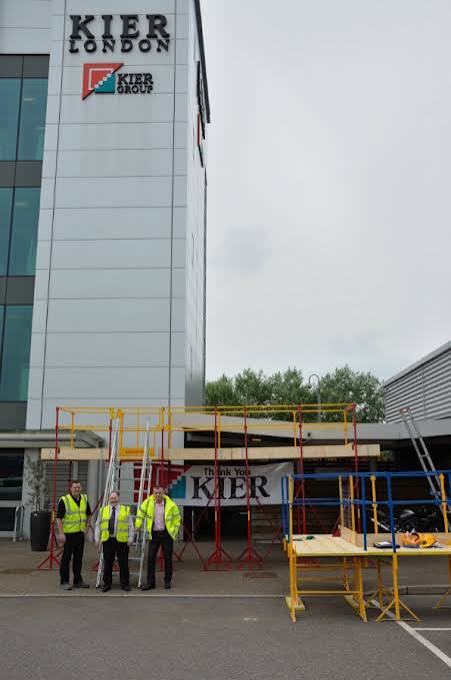
2.6. Kier Construction
Kier is a UK construction and infrastructure group delivering building, civil engineering and infrastructure projects. Its capabilities are relevant to clients undertaking commercial and public-sector developments, particularly projects involving complex external works or connections to existing infrastructure.
-
Core services: Building Construction, Civil Engineering, Infrastructure Delivery, Refurbishment and Regeneration
-
Key sectors: Healthcare, Education, Residential, Public Sector, Transport and Utilities
-
Key strength: Combined building and infrastructure expertise for projects with complex site and engineering requirements
-
Website: Kier
2.7. Wates
Wates is a UK construction group with experience across commercial buildings, residential developments, retail and public-sector projects. Its construction capabilities are relevant to developers and property owners undertaking new construction, refurbishment or extensions in operational and constrained urban environments.
-
Core services: Main Contracting, Building Construction, Design-and-Build, Refurbishment and Pre-Construction
-
Key sectors: Commercial, Workplace, Retail, Residential and Public Sector
-
Key strength: Experience in commercial construction and refurbishment, including projects with complex site constraints
-
Website: Wates

2.8. Balfour Beatty
Balfour Beatty is an international infrastructure group with UK construction and engineering operations. The company delivers major infrastructure and selected building projects, making it relevant to clients procuring complex construction programmes involving transport, public facilities or wider infrastructure requirements.
-
Core services: Construction, Civil Engineering, Infrastructure Delivery, Engineering and Project Planning
-
Key sectors: Transport, Highways, Energy, Utilities, Education and Public Infrastructure
-
Key strength: Expertise in large-scale infrastructure and technically demanding engineering programmes
-
Website: Balfour Beatty
2.9. Willmott Dixon
Willmott Dixon is a UK construction company delivering new-build, refurbishment and regeneration projects across London, the South East and other regional markets. Its portfolio covers multiple building sectors, making it relevant to public bodies, developers and organisations seeking an experienced building contractor.
-
Core services: Building Construction, Pre-Construction, Refurbishment, Regeneration and Construction Delivery Management
-
Key sectors: Education, Healthcare, Commercial, Residential, Leisure and Community Buildings
-
Key strength: Broad building-sector experience and regional delivery capabilities
-
Website: Willmott Dixon
2.10. Costain
Costain is a UK infrastructure solutions and engineering delivery company focused on complex infrastructure programmes rather than conventional commercial building construction. Its capabilities are particularly relevant to infrastructure owners and public authorities delivering transport, water and utility projects.
-
Core services: Infrastructure Engineering, Construction Delivery, Design Coordination, Programme Management and Supply-Chain Coordination
-
Key sectors: Transport, Rail, Highways, Water, Wastewater and Utilities
-
Key strength: Delivery of complex infrastructure programmes requiring integrated engineering and construction expertise
-
Website: Costain

3. How to Evaluate UK General Contractors Objectively
There is no single measure that determines whether a contractor is the best choice for a project. A large company may offer extensive resources but may not be the right fit for a smaller or highly specialised development. A regional contractor may offer relevant local knowledge but lack experience with a complex high-rise scheme.
A transparent assessment should consider the following criteria.
3.1. Relevant Project Experience
Request examples that match the project in terms of:
-
Building type and intended use.
-
Contract value and overall scale.
-
Structural system and construction method.
-
Site conditions and logistical constraints.
-
Procurement route and design responsibility.
-
Construction programme and phasing.
-
Requirements for operating buildings or public access to remain open.
Check whether the contractor was the main contractor, a specialist subcontractor, a construction manager or a member of a joint venture. The title of a project alone does not establish the company's precise role.
3.2. Financial and Commercial Capacity
For projects with substantial financial commitments, evaluate the contracting entity's commercial capacity and ability to support the proposed contract.
Useful checks include:
-
The identity of the legal entity signing the contract.
-
Recent filed accounts and relevant financial information.
-
Appropriate insurance and any required bonds or guarantees.
-
Payment arrangements and subcontractor management.
-
Proposed contract terms and risk allocation.
-
The contractor's current workload and resource commitments.
Revenue and employee numbers can provide context, but they do not independently prove that a contractor is suitable or financially secure for a particular project.
3.3. Procurement and Design-and-Build Capability
The procurement strategy affects how responsibilities are distributed among the client, consultants and contractor.
Under a traditional procurement route, the client generally appoints its design consultants to develop the design, and the contractor constructs the works under the agreed contract.
Under design and build, the contractor takes on design responsibilities as defined by the contract. The scope may include design development, coordination with consultants and specialist suppliers, and management of design changes during construction.
Before appointment, establish:
-
Which party is responsible for each design package.
-
Who reviews and approves design information.
-
How design changes are instructed and costed.
-
Which information must be complete before construction begins.
-
How specialist contractors contribute to technical design.
-
Who coordinates building services and structural interfaces.
3.4. Programme and Project Delivery
A realistic construction programme should identify design milestones, procurement lead times, approvals, enabling works, construction sequences, testing and handover.
Ask the contractor how it intends to manage long-lead materials, specialist subcontractor availability, design information release, site logistics and potential programme risks.
Avoid treating a headline completion date as a guarantee. Programme commitments depend on the contract, assumptions, client decisions, site conditions, statutory approvals and other project-specific factors.
3.5. Quality Assurance and Health and Safety
A contractor should explain its quality management procedures and how inspection, testing, defects and corrective actions are documented.
For health and safety, confirm the duties of the client, principal designer, principal contractor and other parties under the applicable legal framework. Under CDM 2015, the principal contractor has specific duties during the construction phase.
3.6. Sustainability and Construction Methods
Depending on the project, assess the contractor's experience with:
-
Reuse and refurbishment of existing buildings.
-
Waste reduction and material recovery.
-
Off-site manufacturing and prefabrication.
-
Low-carbon construction materials.
-
Energy and environmental performance requirements.
-
Responsible sourcing and supply-chain management.
-
Building certification requirements specified by the client.
Claims about sustainability should be supported by project-specific evidence and clear measurement boundaries. An objective comparison should not assume that a contractor's general environmental commitments guarantee a particular result on every project.
3.7. BIM and Digital Construction Capabilities
For BIM-enabled projects, review the contractor's procedures for coordinating architectural, structural and MEP information.
Important considerations include:
-
The BIM Execution Plan and project information requirements.
-
Model exchange formats and coordination schedules.
-
Clash detection and issue management.
-
Revision control and approval workflows.
-
Model quality assurance.
-
Digital construction planning and, where required, 4D scheduling.
-
Handover information and as-built models.
The relevant question is how digital tools support the actual project delivery process, not simply whether a contractor says it uses BIM.
4. BIM Coordination for General Contractors in the UK
Building Information Modelling can support construction planning by helping project teams coordinate design information, identify interfaces and communicate changes before they affect site activities.
For a main contractor, BIM can connect the design team, specialist subcontractors, procurement activities and construction programme. Its effectiveness depends on the quality of the input information, the agreed modelling scope, the coordination process and the timely review of issues by responsible professionals.
4.1. Typical BIM Uses in Construction
|
BIM application |
Potential value for a contractor |
|
Architectural BIM modelling |
Supports review of layouts, spatial requirements and design information |
|
Structural BIM modelling |
Represents beams, columns, slabs, cores and other structural elements |
|
MEP BIM modelling |
Represents HVAC, plumbing, electrical and fire protection systems |
|
Model federation |
Combines discipline models for multidisciplinary review |
|
Clash detection |
Identifies potential geometric conflicts between systems |
|
4D BIM |
Links model elements to construction activities where the scope supports it |
|
Quantity and information extraction |
Supports specified quantity workflows and technical documentation |
|
As-built BIM |
Records verified model information for handover when required |
BIM does not eliminate all construction risk. A model may contain incomplete information, and not every detected intersection is a genuine design conflict. Findings must be reviewed, assigned and resolved through an agreed process.
4.2. Architecture–Structure–MEP Coordination
Architectural, structural and MEP systems often compete for limited space. Examples include ducts crossing beams, cable trays interfering with pipework, service openings requiring structural review and plant equipment needing access and maintenance clearances.
A coordinated BIM process can help teams:
-
Establish model requirements, coordinate systems and exchange procedures.
-
Develop discipline models using approved design information.
-
Combine the models for coordination review.
-
Identify and record potential clashes.
-
Assign issues to the responsible discipline.
-
Implement approved design or routing changes.
-
Recheck the models and record the status of coordination issues.
-
Deliver the agreed model and technical documentation.
The process should be aligned with the project's contract and information requirements. Design decisions affecting structural adequacy, fire performance, compliance or other engineering matters must be reviewed by the appropriately appointed professionals.
4.3. BIM Coordination and Construction Project Management
BIM coordination is most useful when it is integrated into the project delivery process rather than treated as a separate modelling exercise.
For example, a main contractor may use coordination meetings to review design issues before a construction work package is released. The team can then track outstanding decisions, agree responsibilities and update the programme to reflect required information or approvals.
A structured process can improve visibility of potential clashes and support earlier issue resolution. However, actual time and cost outcomes depend on project conditions, the quality of design information, decision-making speed and the team's coordination procedures.
5. General Contractor London: What Should Local Clients Consider?
Projects in London can involve specific logistical and operational challenges. These may include constrained sites, neighbouring buildings, underground infrastructure, restricted delivery access, occupied properties, heritage considerations and the need to maintain public access.
A contractor's general UK experience is valuable, but clients should also confirm that the proposed team has relevant London project experience.
5.1. Site Logistics and Neighbouring Properties
Ask how the contractor intends to manage deliveries, crane operations, storage, waste removal, pedestrian access and neighbouring assets.
For sites close to transport infrastructure or occupied buildings, review the proposed approach to surveys, monitoring, protection measures and coordination with relevant stakeholders.
5.2. Existing Buildings and Refurbishment
Refurbishment can require investigation of existing structures, careful demolition sequencing and temporary support. The contractor should explain how it will coordinate with structural engineers, building services consultants and specialist subcontractors to manage unforeseen conditions.
The contract should also clarify how additional work, design changes and delays arising from hidden conditions will be assessed.
5.3. Commercial Fit-Out and Tenant Requirements
Commercial office and retail projects may require phased delivery, coordination with landlord requirements and integration of tenant-specific systems.
Confirm whether the contractor's scope includes shell and core works, landlord fit-out, tenant fit-out, specialist installations, commissioning or post-handover support. These services may be procured under separate contracts.
5.4. Planning and Regulatory Interfaces
The contractor should understand the approvals and technical information required for its appointed scope. However, planning permission, building control functions, design duties and construction responsibilities may be assigned to different parties.
Do not assume that appointing a general contractor automatically transfers every approval or compliance responsibility. The contract and project responsibility matrix should clearly identify each party's role.
6. DHA Engineering – BIM Outsourcing Services for General Contractors
Website: DHA Engineering
DHA Engineering is a Vietnam-based BIM consulting and MEPF engineering company providing BIM modelling, coordination and outsourcing services. Its published capabilities include architectural and structural BIM modelling, MEP coordination, clash detection, shop drawings and as-built BIM.
For UK general contractors and main contractors, DHA may provide additional BIM production capacity during peak workloads or tight project schedules.
6.1. Core BIM Services
-
BIM Consulting: BIM implementation planning and BIM Execution Plan support.
-
Architectural and Structural Modelling: Revit modelling with LOD 300–400, subject to project requirements.
-
MEP BIM Coordination: Model coordination and clash detection using Navisworks and Dalux.
-
MEP Shop Drawings: Coordinated technical drawings for building services.
-
MEPF Design: HVAC, electrical, plumbing and fire protection services.
-
As-Built BIM: Model updates and facility-management information where included in the agreed scope.
6.2. Benefits for UK General Contractors
BIM outsourcing can help contractors supplement internal resources, coordinate multidisciplinary models and manage design updates. Typical tasks include model development, clash reporting, approved model revisions and preparation of agreed technical deliverables.
DHA's published portfolio includes projects across industrial, education, residential and other building sectors, demonstrating experience in multidisciplinary BIM modelling.
6.3. Coordination and Project Delivery
DHA identifies Revit, Navisworks and Dalux within its BIM workflow. Before engagement, contractors should confirm modelling scope, LOD requirements, software compatibility, file formats, coordination procedures, quality assurance and delivery schedules.
Clash detection supports the identification of potential conflicts but does not replace technical review or approval by the responsible design professionals.
6.4. What Contractors Should Confirm
Before appointing DHA, UK contractors should agree on:
-
Required models, drawings and deliverables.
-
Design inputs, modelling standards and LOD.
-
Coordination responsibilities and approval procedures.
-
Quality checks, revision allowances and project deadlines.
-
Confidentiality, information security and file ownership.
BIM outsourcing can supplement digital production capacity but does not transfer the main contractor's contractual obligations or replace the responsibilities of appointed design professionals.
7. Frequently Asked Questions About UK General Contractors
What is a general contractor in the UK?
A general contractor is a broad term for a company managing and delivering construction work. In the UK, the term main contractor is more commonly used for the contractor appointed under the principal building contract to deliver the agreed works and manage the supply chain.
What is the difference between a general contractor and a main contractor?
The terms are often used similarly in general discussion. Main contractor is the more common UK construction term for the party contracted directly by the client to deliver the construction works. The precise obligations depend on the contract and procurement route.
What does a principal contractor do in the UK?
Under CDM 2015, the principal contractor is appointed by the client for a project involving more than one contractor. The role includes planning, managing, monitoring and coordinating the construction phase in relation to health and safety. The role should not be confused with the general description of a main contractor.
Which UK general contractors are suitable for London projects?
The appropriate contractor depends on the project type, size, procurement route and technical requirements. Mace, Multiplex, Sir Robert McAlpine, Laing O’Rourke, Morgan Sindall Construction, Kier, Wates, Balfour Beatty, Willmott Dixon and Costain publish project information relevant to different sectors. Use the shortlist as a starting point and verify the specific team's experience and scope.
How should I choose a general contractor in London?
Compare relevant project experience, the proposed team, commercial capacity, procurement approach, programme, quality assurance, health and safety procedures, supply-chain management and BIM coordination capabilities. For London sites, also review experience with logistics, neighbouring properties, existing buildings and operational constraints.
Are the biggest construction contractors always the best choice?
No. Company size can indicate resources and breadth of experience, but it does not prove that a contractor is the best fit for a particular project. Relevant technical experience, team availability, delivery approach, commercial terms and the proposed scope should carry significant weight in the selection process.
What is the difference between a main contractor and a specialist contractor?
A main contractor usually manages the overall construction scope under the main contract, including coordination of the supply chain. A specialist contractor delivers a defined trade or technical package, such as façade installation, structural steel, piling or MEP installation. A specialist may be appointed by the main contractor or, depending on the procurement route, directly by the client.
What is design and build?
Design and build is a procurement approach in which the contractor takes responsibility for both design and construction to the extent defined in the contract. It can provide a single point of contractual responsibility for the agreed scope, but the client should carefully define design requirements, approvals, performance criteria and change-control procedures.
How does BIM help general contractors?
BIM can support model coordination, clash detection, technical information management and construction planning. It can help the project team identify potential conflicts between architecture, structure and MEP systems, but effective results depend on reliable design information, clear responsibilities and timely issue resolution.
Can general contractors outsource BIM modelling?
Yes. Contractors may outsource defined BIM production and coordination tasks to supplement their internal teams. Before doing so, they should agree the model scope, standards, deliverables, review process, information security and responsibility for design decisions.
Does DHA Engineering provide construction contracting services in the UK?
DHA Engineering's published services focus on BIM consulting, BIM modelling, MEP coordination, MEPF engineering support, shop drawings and as-built BIM. These services should not be treated as equivalent to appointing DHA as the main contractor responsible for delivering a UK construction project.
What information should I prepare before requesting a contractor proposal?
Prepare the project brief, site information, drawings, specifications, target programme, budget range, procurement preference, required services and any known constraints. Clarify whether the proposal should include design, pre-construction services, construction, BIM coordination, commissioning or handover support.
See more:
Structural Engineering Companies in London: 10 UK Firms to Consider
M&E Contractors UK: 10 Mechanical and Electrical Companies to Consider
Architecture Offices in London: 10 Leading Architecture Firms, UK Market Guide and BIM Outsourcing
BIM Services UK: Reputable BIM Companies, Evaluation Criteria
main.comment_read_more