Top BIM Companies in USA: How to Choose a Reliable BIM Partner
- 1. What Is BIM in the USA?
- 2. Top BIM Companies in USA
- 2.1. Jacobs
- 2.2. AECOM
- 2.3. WSP USA
- 2.4. HDR
- 2.5. Stantec
- 2.6. Gensler
- 2.7. HOK
- 2.8. Comparison of Selected BIM Companies in USA
- 3. How to Evaluate BIM Companies in USA
- 3.1. Verify the Company's Legal and Business Identity
- 3.2. Distinguish BIM Production From Engineering Responsibility
- 3.3. BIM Modeler Is Not Automatically a Licensed Engineer
- 4. BIM Standards and Technology Used in the USA
- 4.1. NBIMS-US
- 4.2. BIM Execution Plan
- 4.3. ISO 19650 in the U.S.
- 4.4. OpenBIM and IFC in the USA
- 4.5. BIM Outsourcing in the USA
- 4.6. BIM Consultant vs BIM Outsourcing
- 4.7. When Should a U.S. Company Use BIM Outsourcing?
- 5. How to Evaluate a BIM Outsourcing Company
- DHA ENGINEERING – BIM Services for USA Projects
- DHA's BIM Quality Approach
- Experience Across Different Project Types
- Why Consider DHA for BIM Outsourcing?
- 6. How Much Does BIM Outsourcing Cost in USA?
- 7. Frequently Asked Questions About BIM Services in USA
- 8. Conclusion: Choosing the Right BIM Partner in USA
- DHA Vietnam Engineering Co., Ltd.
This article reviews notable BIM-capable firms in the United States, the standards and technologies shaping BIM in USA, the criteria for evaluating a BIM service provider in USA, and the role of BIM outsourcing for American projects.
The U.S. construction industry is increasingly moving from conventional CAD-based documentation toward data-driven project delivery, Building Information Modeling (BIM), Virtual Design and Construction (VDC), digital coordination, and lifecycle information management. For owners, architects, contractors, MEP firms, and developers, choosing among BIM companies in USA is therefore no longer simply a matter of finding a team that can create a Revit model. A suitable BIM partner should be able to work within the project's BIM requirements, coordinate multidisciplinary models, maintain information quality, follow the required standards, and deliver models and documentation on schedule.
This distinction is particularly important for companies considering BIM outsourcing companies in USA or offshore BIM production. A low modeling rate does not necessarily translate into lower project cost if the delivered model requires extensive rework.
1. What Is BIM in the USA?
In the United States, BIM should not be understood simply as 3D modeling.
The National Institute of Building Sciences (NIBS) describes the National BIM Standard-United States (NBIMS-US) as a national-level, consensus-based framework for defining requirements, planning BIM adoption, and exchanging information between project participants. The current NBIMS-US Version 4 includes modules covering Project BIM Requirements, BIM Execution Planning, BIM Uses, and COBie.
The earlier NBIMS-US definition also describes BIM as a digital representation of the physical and functional characteristics of a facility and emphasizes its role as a shared information resource throughout the asset lifecycle.
2. Top BIM Companies in USA
The companies below should not be interpreted as an absolute ranking of the seven best BIM providers in America.
The U.S. market contains architecture firms, engineering consultancies, contractors, technology companies and specialist BIM production companies. Their business models are also very different.
Instead, the following companies are selected because they have publicly documented BIM, digital delivery, VDC or building information capabilities and substantial activity in the U.S. market.
For additional scale verification, ENR's 2026 Top 500 Design Firms ranks U.S. design firms according to design-services revenue. The 2026 list places Jacobs 1, AECOM 2, WSP 4, HDR 6 and Stantec 9 overall. This is a measure of design-firm scale, not a BIM quality certification.
2.1. Jacobs
Jacobs is one of the largest engineering and professional services firms operating in the United States and internationally. ENR's 2026 Top 500 Design Firms ranks Jacobs #1 overall, based on design-services revenue.
Jacobs has publicly documented BIM and digital delivery applications in technically complex projects. For example, its Utah Data Center project used extensive Building Information Modeling to coordinate disciplines, manage risk and support construction of a mission-critical facility.
Jacobs also demonstrates the transition from BIM toward digital twins. On the Tuas Water Reclamation Plant project, Jacobs reports working with more than 2,400 native BIM models during design, more than 3,500 native BIM models during construction, and 150 federated models across 20 contractors.
- Core BIM capabilities: BIM, Digital Engineering, Digital Delivery, BIM Coordination, Digital Twin, Asset Information
- Key sectors: Infrastructure, Transportation, Water, Buildings, Data Centers, Mission Critical, Energy
- Notable strength: Large multidisciplinary projects with complex information environments
- Verification: ENR 2026 Top 500 Design Firms; official project documentation
- Website: jacobs.com
Why Jacobs is relevant as a BIM benchmark
Jacobs demonstrates an important characteristic of mature BIM implementation: BIM is integrated into a wider digital delivery environment rather than treated as an isolated modeling service.
2.2. AECOM
AECOM is a global infrastructure and engineering consultancy with major operations throughout the United States. ENR's 2026 Top 500 Design Firms ranks AECOM 2 overall.
AECOM publicly documents BIM and Virtual Design and Construction applications. Its published VDC material describes BIM-based design coordination, design review, 3D/4D modeling, construction and fabrication coordination, and cost-related applications.
Its building engineering capabilities also integrate mechanical and electrical engineering with BIM and project delivery.
- Core BIM capabilities: BIM, VDC, 3D/4D Modeling, Design Coordination, Digital Engineering
- Key sectors: Buildings, Infrastructure, Transportation, Healthcare, Data Centers, Industrial
- Notable strength: Multidisciplinary engineering and large infrastructure projects
- Verification: ENR 2026 ranking; official AECOM BIM/VDC and engineering documentation
- Website: aecom.com
- Address: 1201 N 6th St, Terre Haute, USA
- Google maps: https://maps.app.goo.gl/6igzWUUNFS74XU8Y7
AECOM is therefore a useful benchmark for companies looking for a BIM organization capable of connecting modeling with engineering, construction coordination and broader digital delivery.

2.3. WSP USA
WSP USA is another major multidisciplinary engineering and professional services firm with extensive U.S. operations. WSP ranked 4 in ENR's 2026 Top 500 Design Firms.
WSP's U.S. buildings practice describes an integrated multidisciplinary approach covering building systems, HVAC, water, power and connected building technologies. Its materials also emphasize Integrated Design Management and data-driven approaches to building performance.
- Core BIM capabilities: BIM, Integrated Design Management, Building Systems, Digital Engineering
- Key sectors: Commercial, Healthcare, Transportation, Industrial, Data Centers and Complex Buildings
- Notable strength: Multidisciplinary coordination and building-performance integration
- Verification: ENR ranking; official U.S. buildings and engineering documentation
- Website: wsp.com/en-us
- Address: WSP USA, 2202 N West Shore Blvd, Suite 300, Tampa, FL 33607
- Google maps: https://maps.app.goo.gl/XWFWAL26TgWG8wWG6
For a project owner, the important distinction is that WSP's BIM capability sits within a broader engineering organization. That can be valuable when BIM must support engineering decisions rather than merely document geometry.
2.4. HDR
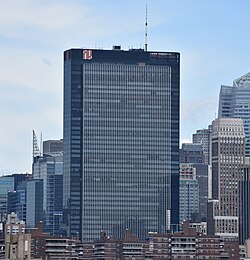
HDR is a U.S based multidisciplinary design and engineering firm with substantial BIM and digital-delivery experience. HDR ranked 6 in ENR's 2026 Top 500 Design Firms.
HDR publicly describes services including BIM technical support, BIM/CAD standards and templates, Project Information Model delivery, Digital Twin development, BIM audits and peer reviews.
HDR has also participated in the development of open BIM standards for bridges and structures in the United States. In 2025, buildingSMART International recognized HDR as a finalist in its Professional Research category for work associated with national openBIM standards for bridges and structures.
- Core BIM capabilities: BIM Management, BIM Audits, Model Delivery, Digital Twin, OpenBIM
- Key sectors: Transportation, Healthcare, Buildings, Water, Infrastructure
- Notable strength: Infrastructure BIM and information management
- Verification: ENR ranking; HDR BIM service documentation; buildingSMART recognition
- Website: hdrinc.com
This makes HDR particularly relevant when evaluating BIM companies for infrastructure projects rather than only building projects.
2.5. Stantec
Stantec is a large multidisciplinary architecture and engineering firm with extensive U.S. operations. Stantec ranked 9 in ENR's 2026 Top 500 Design Firms.
Its buildings and engineering operations cover multidisciplinary design and building systems, while its digital capabilities support coordination and information-driven project delivery.
- Core BIM capabilities: Building Engineering, BIM, Digital Delivery, Multidisciplinary Coordination
- Key sectors: Healthcare, Education, Commercial, Hospitality, Infrastructure and Mission Critical
- Notable strength: Integration of architecture and engineering disciplines
- Verification: ENR 2026 ranking; official Stantec service and project information
- Website: stantec.com
- Address: 475 5th Ave 12th floor, New York, USA
- Google maps: https://maps.app.goo.gl/cjnnsnR2bNu13GnAA
Stantec can therefore be considered when the BIM requirement is embedded within a larger architecture and engineering workflow.

2.6. Gensler
Gensler is one of the world's best-known architecture and design firms, with a substantial U.S. presence.
Gensler's publicly documented digital practice includes Building Information Modeling as part of project delivery. Its research has also examined the relationship between BIM, connected devices and digital twins, including the use of BIM models as digital representations of physical spaces.
- Core BIM capabilities: BIM, Digital Design, Design Technology, Integrated Delivery
- Key sectors: Commercial, Workplace, Retail, Hospitality, Healthcare, Mixed-use
- Notable strength: BIM integrated with architectural design and digital experience
- Verification: Official Gensler BIM and digital practice documentation
- Website: gensler.com
Gensler is particularly relevant as a benchmark for projects where BIM must remain closely connected to architectural design, visualization and multidisciplinary design development.

2.7. HOK
HOK is a major architecture, engineering and design practice with a long history of using BIM and design technology.
HOK has publicly documented leadership in BIM and VDC. Its technical leadership has included BIM, VR and AR initiatives, while the company has emphasized improving model authoring so BIM deliverables can provide usable information to clients.
- Core BIM capabilities: BIM, VDC, Design Technology, Technical Coordination
- Key sectors: Healthcare, Science & Technology, Higher Education, Aviation, Commercial
- Notable strength: Technical design and BIM integration within architecture
- Verification: Official HOK technical leadership and project documentation
- Website: hok.com
- Address: One Bush St200, San Francisco, USA
- Google maps: https://maps.app.goo.gl/TXjxZbyKztch6WSZ9

2.8. Comparison of Selected BIM Companies in USA
| Company | Primary Positioning | BIM / Digital Strength | Typical Project Environment |
| Jacobs | Engineering & digital delivery | BIM, Digital Twin, Information Management | Infrastructure, Data Centers, Water |
| AECOM | Engineering & infrastructure | BIM, VDC, 3D/4D, Coordination | Infrastructure, Buildings, Industrial |
| WSP USA | Multidisciplinary engineering | BIM, Building Systems, Integrated Design | Buildings, Healthcare, Transportation |
| HDR | Engineering & infrastructure | BIM Management, OpenBIM, Digital Twin | Transportation, Infrastructure, Buildings |
| Stantec | Architecture & engineering | BIM, Digital Delivery, Coordination | Healthcare, Education, Commercial |
| Gensler | Architecture & design | BIM, Digital Design, Integrated Delivery | Commercial, Workplace, Healthcare |
| HOK | Architecture & technical design | BIM, VDC, Design Technology | Healthcare, Aviation, Science & Technology |
This comparison should be treated as a market reference rather than a quality ranking. The most suitable BIM partner depends on the actual scope, project stage, required deliverables, software environment, BIM standards and contractual responsibilities.
3. How to Evaluate BIM Companies in USA
Searching for bim companies in usa can produce hundreds of results, ranging from major engineering firms to small BIM production studios.
The first mistake is to compare them only by hourly rates or modeling prices.
A professional evaluation should examine at least the following criteria.
3.1. Verify the Company's Legal and Business Identity
Before sending project information or signing a BIM outsourcing agreement, verify:
- Legal company name.
- Registered business address.
- Official website.
- Corporate email domain.
- Physical office location.
- Telephone number.
- Named project contact.
- Business registration where applicable.
- Professional licenses where engineering responsibility is involved.
- Insurance requirements where applicable.
- Client references.
- Published project portfolio.
A Google Maps listing can be useful as an additional location check, but it should not be treated as proof of technical competence.
The strongest verification comes from combining official corporate information, professional registrations, project evidence and independent industry sources.
3.2. Distinguish BIM Production From Engineering Responsibility
This is one of the most important points when selecting a BIM service provider in USA.
A BIM production company may create:
- Revit models.
- BIM families.
- Coordination models.
- Shop drawings.
- As-built models.
- Clash reports.
- Quantity take-offs.
That does not automatically mean that the company is legally responsible for engineering design.
For projects requiring professional engineering services, the client should determine whether a licensed Professional Engineer (PE) is required and who will hold design responsibility.
3.3. BIM Modeler Is Not Automatically a Licensed Engineer
A Revit model can accurately represent engineering information while still being a production deliverable rather than a stamped engineering design.
Therefore, contracts should clearly distinguish: BIM Production → Engineering Design → PE Review/Approval → Professional Seal where applicable.
This distinction is especially important for HVAC, electrical, structural and life-safety work.
4. BIM Standards and Technology Used in the USA
4.1. NBIMS-US
The National Institute of Building Sciences currently publishes NBIMS-US Version 4.
NBIMS-US V4 contains modules for:
- Project BIM Requirements.
- BIM Execution Planning.
- BIM Uses.
- COBie V3.
NIBS describes the standard as a consensus-based national-level standard intended to support BIM requirements, adoption planning and information exchange.
4.2. BIM Execution Plan
The NBIMS-US V4 BEP standard defines elements that owners can use to establish Project BIM Requirements for delivery teams.
A project BIM workflow should therefore establish requirements before modeling begins.
Typical requirements include:
- BIM Uses.
- Model responsibility.
- Required software.
- Model exchange format.
- LOD/LOI requirements.
- Naming conventions.
- Coordinate system.
- CDE.
- Model federation.
- Clash detection.
- Quality control.
- Deliverable schedule.
- Handover requirements.
4.3. ISO 19650 in the U.S.
ISO 19650 can also be relevant to U.S. projects.
Importantly, it should not be described as a universal U.S. legal requirement.
NBIMS-US V4 itself references ISO 19650-1 and ISO 19650-2 as reference documents.
Therefore, whether ISO 19650 applies to a specific U.S. project depends on:
- Owner requirements.
- Contract requirements.
- Project BIM Execution Plan.
- Procurement requirements.
- International project requirements.
- Organizational BIM standards.
This is different from saying that every U.S. construction project is legally required to comply with ISO 19650.
4.4. OpenBIM and IFC in the USA
Modern BIM projects frequently involve different software platforms.
For example:
- Autodesk Revit.
- Archicad.
- Tekla Structures.
- Bentley applications.
- Navisworks.
- Civil 3D.
- Other discipline-specific platforms.
Open data exchange can therefore become important.
A BIM provider should understand:
- IFC.
- BCF.
- CDE.
- Model federation.
- Information exchange.
- Data validation.
- Version control.
The objective is not simply to export an IFC file. The real objective is to ensure that the information required by the project survives the exchange process.
4.5. BIM Outsourcing in the USA
The growth of BIM has also created demand for specialized production support.
BIM outsourcing companies in USA may support owners, contractors, architects and engineering firms with additional modeling and coordination capacity.
However, outsourcing should be structured around clearly defined deliverables rather than simply assigning "BIM work."
4.6. BIM Consultant vs BIM Outsourcing
A BIM consultant and a BIM outsourcing provider should not be treated as interchangeable.
| Criteria | BIM Consultant | BIM Outsourcing |
| BIM Strategy | High | According to requirements |
| BIM Execution Plan | Develop / advise | Execute according to approved BEP |
| BIM Standards | Develop / manage | Follow project standards |
| Information Management | High | Production support |
| CDE | Setup / management support | Work within existing CDE |
| BIM Modeling | May provide | Core service |
| Revit Modeling | Available | Highly suitable |
| BIM Coordination | Available | Highly suitable |
| Clash Detection | Available | Available |
| Shop Drawings | May provide | Highly suitable |
| As-Built BIM | May provide | Highly suitable |
| Quantity Take-off | Available | Available |
| Workforce Scaling | Limited by internal structure | Highly flexible |
| Production Capacity | Medium–High | High |
| Best Application | Strategy and information management | BIM production and project capacity |
4.7. When Should a U.S. Company Use BIM Outsourcing?
BIM outsourcing becomes particularly useful when:
- Internal BIM staff are overloaded.
- Several projects must be delivered simultaneously.
- Modeling volume changes significantly by project phase.
- Revit production needs to be scaled quickly.
- The company wants to avoid maintaining a large permanent production team.
- A contractor needs additional coordination resources.
- An engineering company needs modeling support while retaining engineering responsibility internally.
5. How to Evaluate a BIM Outsourcing Company
When comparing BIM service providers in USA, price should not be the first criterion.
A practical evaluation matrix can look like this:
| Evaluation Factor | Recommended Question |
| Technical capability | Can the team handle Architecture, Structure and MEP? |
| Revit capability | Which Revit versions and workflows are supported? |
| BIM standards | Can the team work under project-specific BIM standards? |
| LOD | Can the provider consistently meet required LOD? |
| Coordination | Does the team have a defined clash detection workflow? |
| QA/QC | Is every model checked before submission? |
| Schedule | Is there a documented progress reporting system? |
| Scalability | Can the team increase production capacity quickly? |
| Communication | Can the team work in the client's time zone? |
| Security | Is NDA/confidentiality available? |
| Revision management | How are client comments and changes tracked? |
| Experience | Are comparable projects publicly or contractually verifiable? |
| Pricing | Is the pricing structure transparent? |
DHA ENGINEERING – BIM Services for USA Projects
DHA ENGINEERING is a Vietnam-based BIM engineering company providing BIM production and coordination support for international projects.
The company's current service capabilities include:
- BIM Modeling.
- Architectural BIM.
- MEP BIM.
- HVAC Modeling.
- Plumbing BIM.
- Revit Modeling.
- BIM Coordination.
- Clash Detection.
- Shop Drawing.
- As-Built BIM.
- BIM 4D.
- BIM 5D.
- Scan to BIM.
- BIM Consulting.
- Information Management.
DHA works with AutoCAD and Revit and can adapt its production workflow to the requirements established by the owner, main contractor or project BIM team.
DHA's BIM Quality Approach
For international projects, the practical objective is not simply to produce a visually complete model.
DHA's workflow focuses on:
Project Requirements → BIM Standards → Modeling → Coordination → QA/QC → LOD Check → Client Review → Revision → Final Delivery
DHA can work according to project-specific requirements involving:
- ISO 19650 principles.
- IFC.
- OpenBIM.
- CDE.
- LOD requirements.
- Naming conventions.
- Client BIM standards.
- Contractor BIM standards.
The company also provides periodic project progress reporting and performs LOD and model-quality checks before handover.
Experience Across Different Project Types
DHA has participated in BIM projects involving:
- Hospitals.
- Schools.
- Residential developments.
- Hotels.
- Industrial facilities.
- Factories.
- Infrastructure-related developments.
Representative project experience includes Cooler Master Phases 1 and 2, Dwight School, Dong Anh Inter-level School, Soc Son Inter-level School, Movenpick and Flamingo Linh Truong.
For international clients, DHA can also coordinate according to the client's working time zone and provide support for urgent BIM production requirements.
Why Consider DHA for BIM Outsourcing?
The value proposition of an outsourcing partner should be assessed through measurable project factors rather than simply a lower hourly rate.
For DHA, three priorities are particularly important:
Schedule Control
DHA places project schedule as a primary acceptance criterion. If available production resources are not sufficient to meet the requested deadline, the company prefers to evaluate capacity before accepting the project rather than accepting the scope and failing to deliver it.
Technical Quality
DHA's BIM engineers work across Architecture and MEP disciplines, with particular experience in HVAC, plumbing, Chiller systems and plant-room environments.
Before handover, models are checked against the project's required LOD and technical requirements.
Engineering-Oriented BIM Production
DHA's objective is not simply to create visually complete Revit models.
The team focuses on whether the model can actually support the intended project use, including:
- Coordination.
- Shop Drawing.
- Quantity Take-off.
- Construction.
- As-Built documentation.
- Information exchange.
6. How Much Does BIM Outsourcing Cost in USA?
There is no reliable single "U.S. BIM outsourcing price" because the cost depends heavily on project requirements.
For example, pricing may change according to:
- Building type.
- Total floor area.
- Number of disciplines.
- Existing CAD quality.
- LOD.
- Model complexity.
- MEP density.
- Coordination requirements.
- Shop drawing requirements.
- Revision frequency.
- Project schedule.
- Required deliverable formats.
For this reason, DHA can structure pricing based on project scope and square meter area, while the final quotation should still consider the required LOD, disciplines and deliverables.
A 10,000 m² simple office building and a 10,000 m² hospital cannot reasonably be priced solely by floor area because the information density and coordination requirements can be dramatically different.
6.1. Important Notes Before Ordering BIM Services
Before appointing a BIM company or outsourcing provider, the client should prepare a clear scope.
Information the Client Should Provide
At minimum:
- Architectural drawings.
- Structural drawings.
- MEP drawings.
- Existing BIM models if available.
- Project coordinates.
- Required Revit version.
- BIM Execution Plan.
- BIM standards.
- LOD requirements.
- Naming conventions.
- CDE requirements.
- Required deliverables.
- Deadline.
- Revision procedure.
- Clash detection criteria.
- Confidentiality and Data Security
For projects involving confidential design information, clients should establish:
- NDA.
- Data-access permissions.
- File-sharing rules.
- CDE permissions.
- Revision control.
- Data retention requirements.
- Approved communication channels.
DHA can sign confidentiality agreements with clients and work within the client's designated data-sharing environment.
7. Frequently Asked Questions About BIM Services in USA
Is BIM mandatory for every construction project in the USA?
No. There is no single universal federal rule requiring every U.S. construction project to use BIM.
BIM requirements can arise from an owner, government agency, contract, procurement requirement, project BIM standard or other project-specific condition. NBIMS-US provides national-level consensus guidance rather than functioning as a universal federal BIM mandate.
Does ISO 19650 apply to every U.S. BIM project?
No. ISO 19650 can be specified for a U.S. project, and NBIMS-US V4 references ISO 19650-1 and ISO 19650-2, but ISO 19650 is not automatically mandatory for every U.S. project.
Can an offshore BIM company support a U.S. project?
Yes. An offshore team can provide BIM production, modeling, coordination, documentation and other agreed deliverables.
However, the contract should clearly distinguish BIM production responsibilities from professional engineering responsibility and PE sealing requirements.
Can DHA ENGINEERING work with U.S. clients?
Yes. DHA is positioned to provide remote BIM production and coordination support for international projects and can adapt working hours to the client's project schedule and time zone.
Does DHA provide Revit MEP Modeling?
Yes. Revit MEP Modeling is one of the key production services, including HVAC, plumbing and other MEP systems within the agreed project scope.
Can DHA work according to a client's existing BIM standards?
Yes. DHA can adapt its modeling and coordination workflow according to the client's BIM Execution Plan, BIM standards, LOD requirements, naming conventions, CDE and other project-specific requirements.
Can DHA handle urgent BIM projects?
Yes. DHA can consider urgent BIM projects depending on the required scope, deadline and available production capacity. Schedule feasibility should be confirmed before project acceptance.
How does DHA control BIM quality?
DHA applies project-specific QA/QC procedures, including model review, coordination checks and LOD verification before handover. Progress is also reported periodically according to project requirements.
8. Conclusion: Choosing the Right BIM Partner in USA
The U.S. BIM market includes large multidisciplinary engineering companies, architecture practices, contractors, specialist BIM firms and outsourcing providers. Therefore, a search for top BIM companies in USA should be the beginning of the evaluation rather than the final decision.
The most appropriate partner should be evaluated according to:
Technical capability + Relevant project experience + BIM standards + LOD capability + QA/QC + Schedule reliability + Communication + Information security + Cost transparency.
For companies searching for BIM outsourcing companies in USA, the key question is not simply “Who offers the lowest modeling price?” but rather:
Can the BIM partner consistently deliver the required model, information and documentation at the required quality and schedule?
This is particularly important for projects involving complex MEP systems, HVAC, plant rooms, healthcare facilities, industrial buildings and high-density coordination.
DHA ENGINEERING focuses on providing BIM production and coordination support for owners, contractors, consultants and international project teams, with services covering BIM Modeling, Revit Modeling, MEP BIM, HVAC, Plumbing, BIM Coordination, Clash Detection, Shop Drawing, Scan to BIM, As-Built BIM and BIM 4D/5D.
For international projects, DHA can work according to client-specific BIM requirements, support CDE-based collaboration, apply project-defined LOD requirements, sign NDAs where required, report progress periodically and coordinate according to the client's working time zone.
main.comment_read_more